Find the intent.
Every piece starts with a feeling it should have in the hand and a job it should do. Use, proportion, construction, and visual direction are set before the billet ever meets the fire.
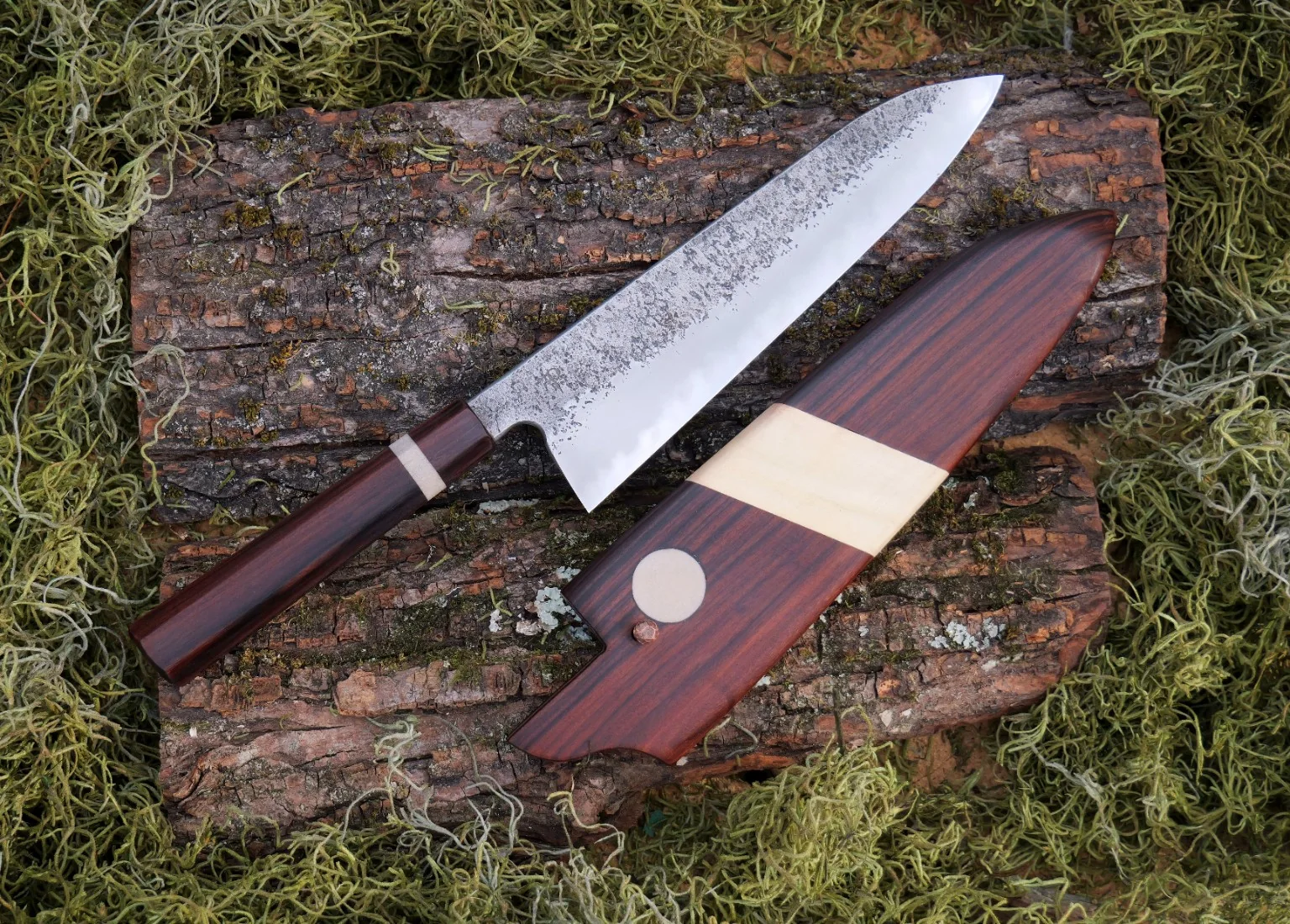
A blade begins long before its silhouette appears. Construction, geometry, surface, and handle evolve together, each decision narrowing the path toward the finished object.
Every piece starts with a feeling it should have in the hand and a job it should do. Use, proportion, construction, and visual direction are set before the billet ever meets the fire.
The alloy is selected—or laminated by hand—to suit the task. Layered construction opens a deeper field: different steels meeting under heat and pressure, each carrying its own structure, behavior, and response to the final finish.
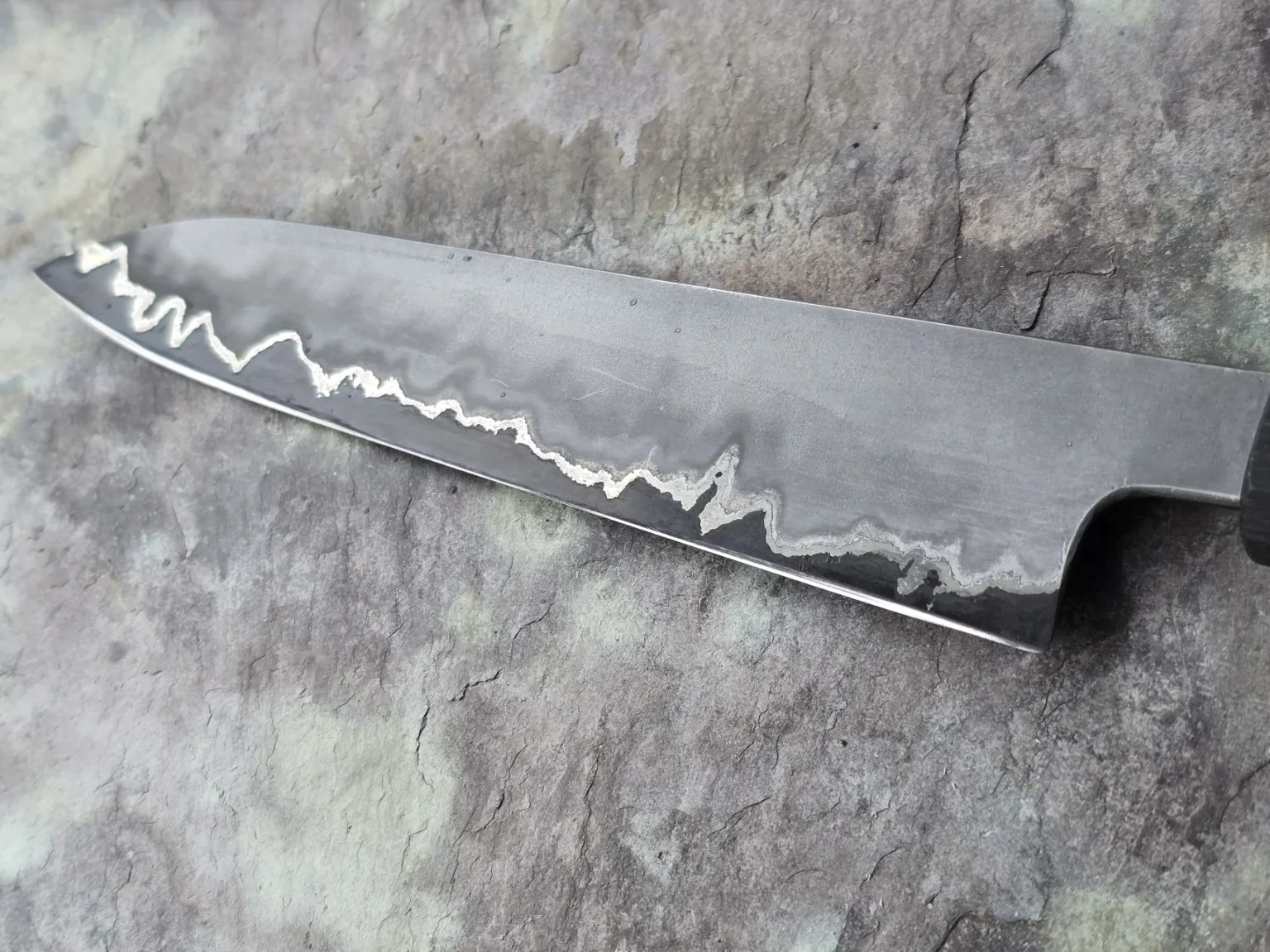
The blade is forged toward its final form, not simply hammered into an outline. Distal taper, thickness distribution, and the first traces of cutting geometry are established while the billet is hot, plastic, and still moving beneath the hammer.
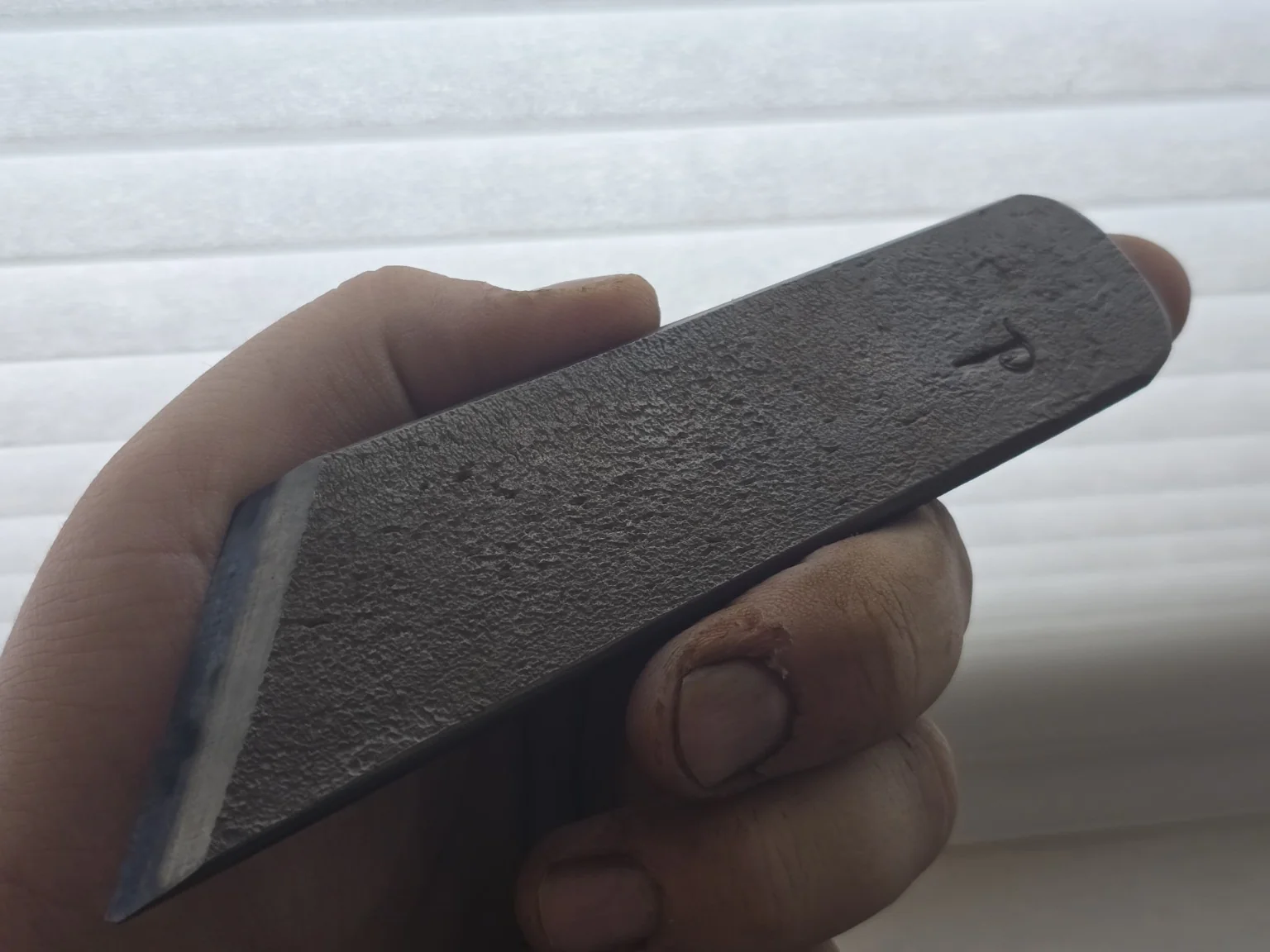
The grind is tuned for the cut: thickness, taper, convexity, and the relationship between spine, face, and edge working as one system. It is the least theatrical part of the process—and the part you feel every time the knife passes through food.
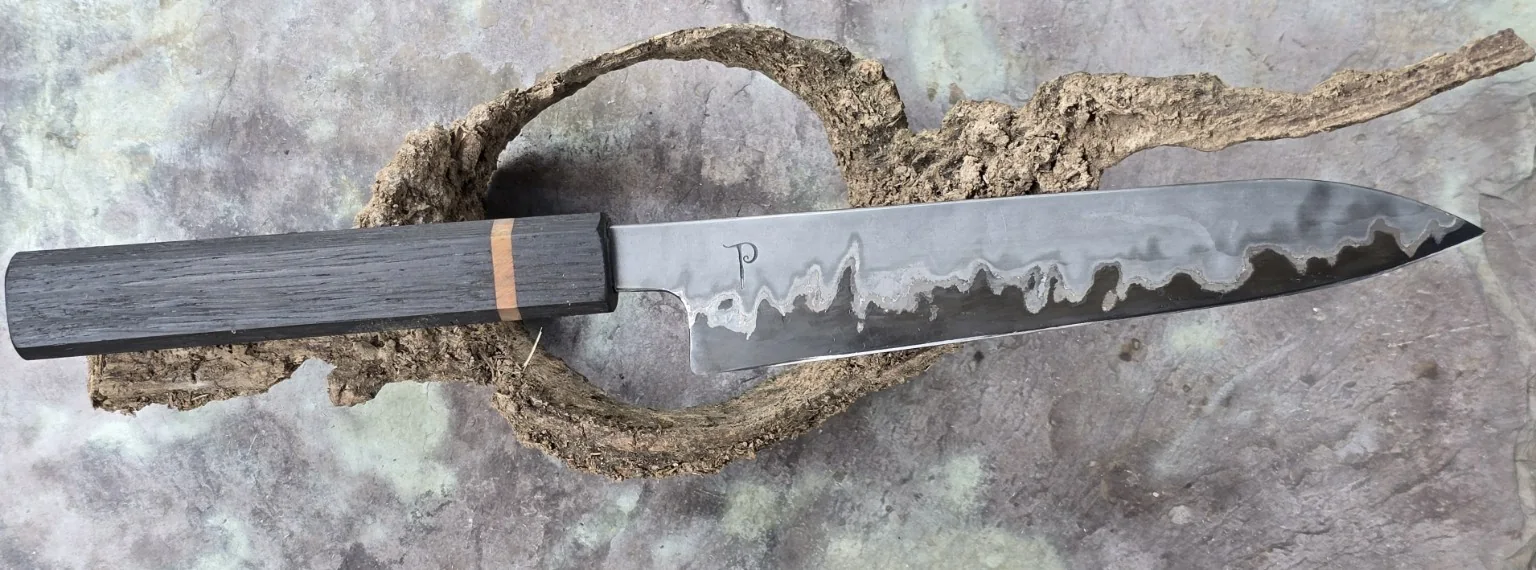
Japanese natural whetstones are central to the final surface. Related to the stones long used in sword polishing, they refine the blade while drawing out layer boundaries, movement, haze, and texture that conventional abrasives often flatten.
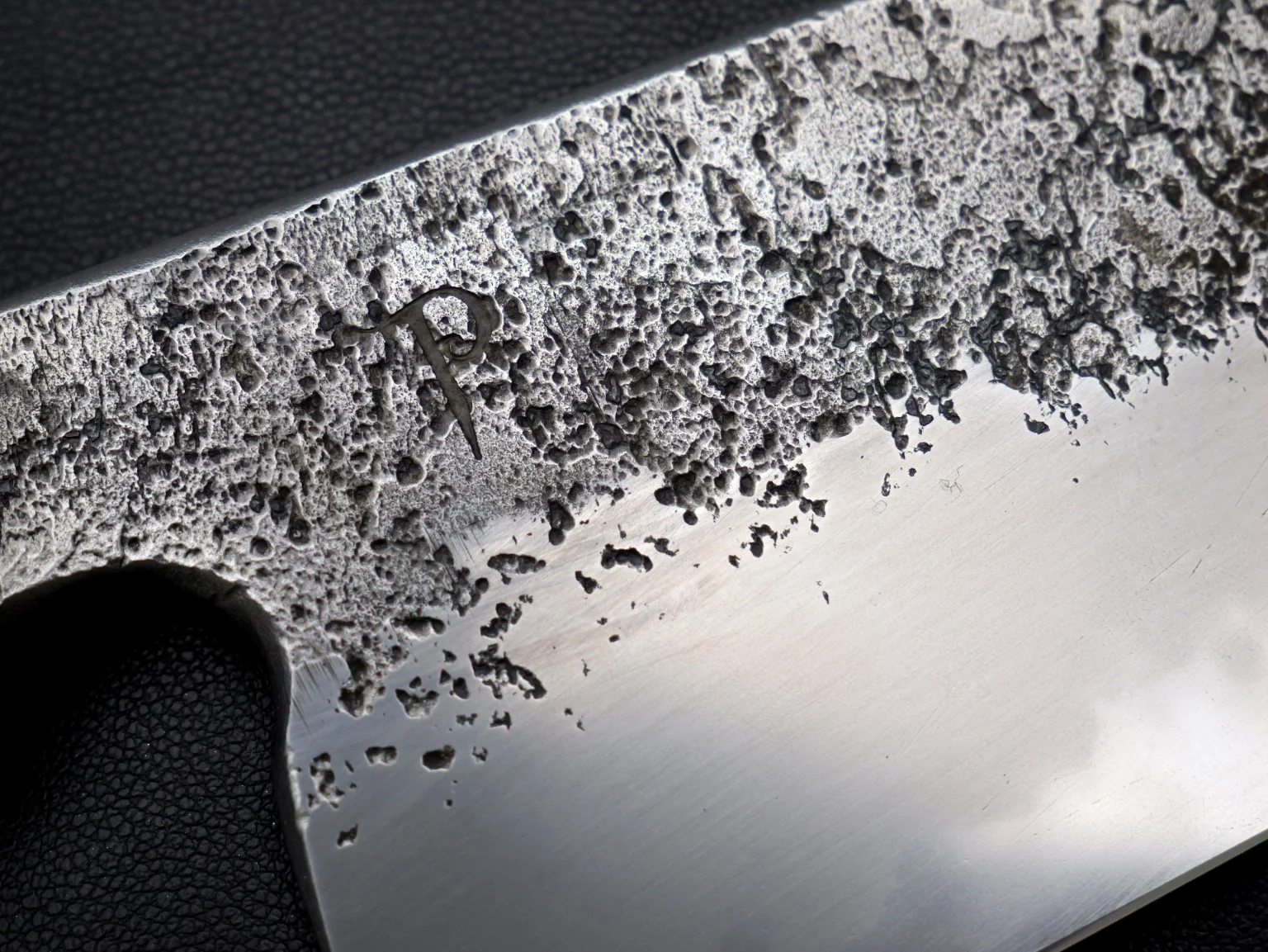
Wood, stone, and metal are chosen for the individual piece. I favor materials with age, history, and character, including local woods where possible. Nothing is there merely to decorate; each element should feel as though it could only belong to that blade.
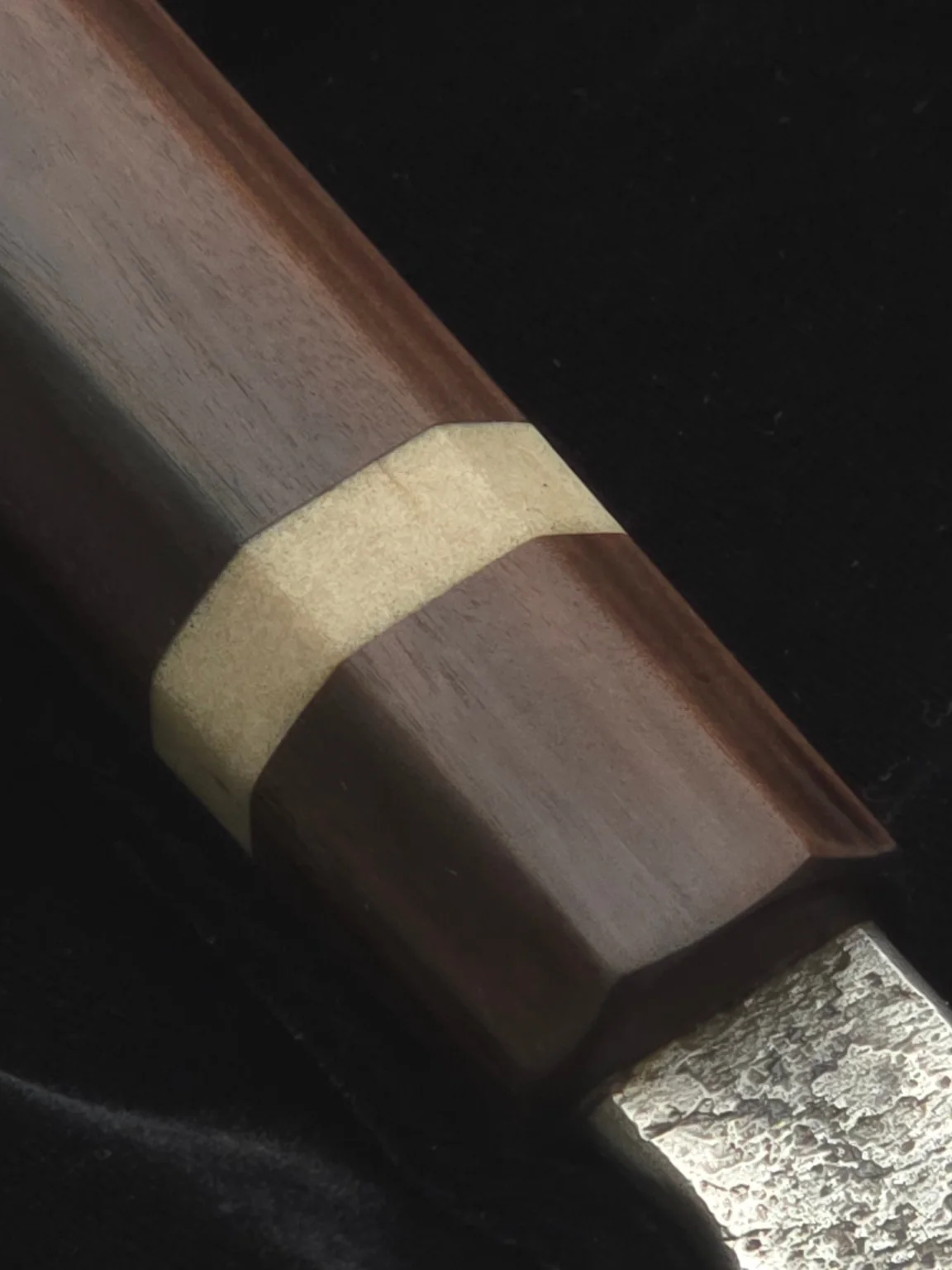
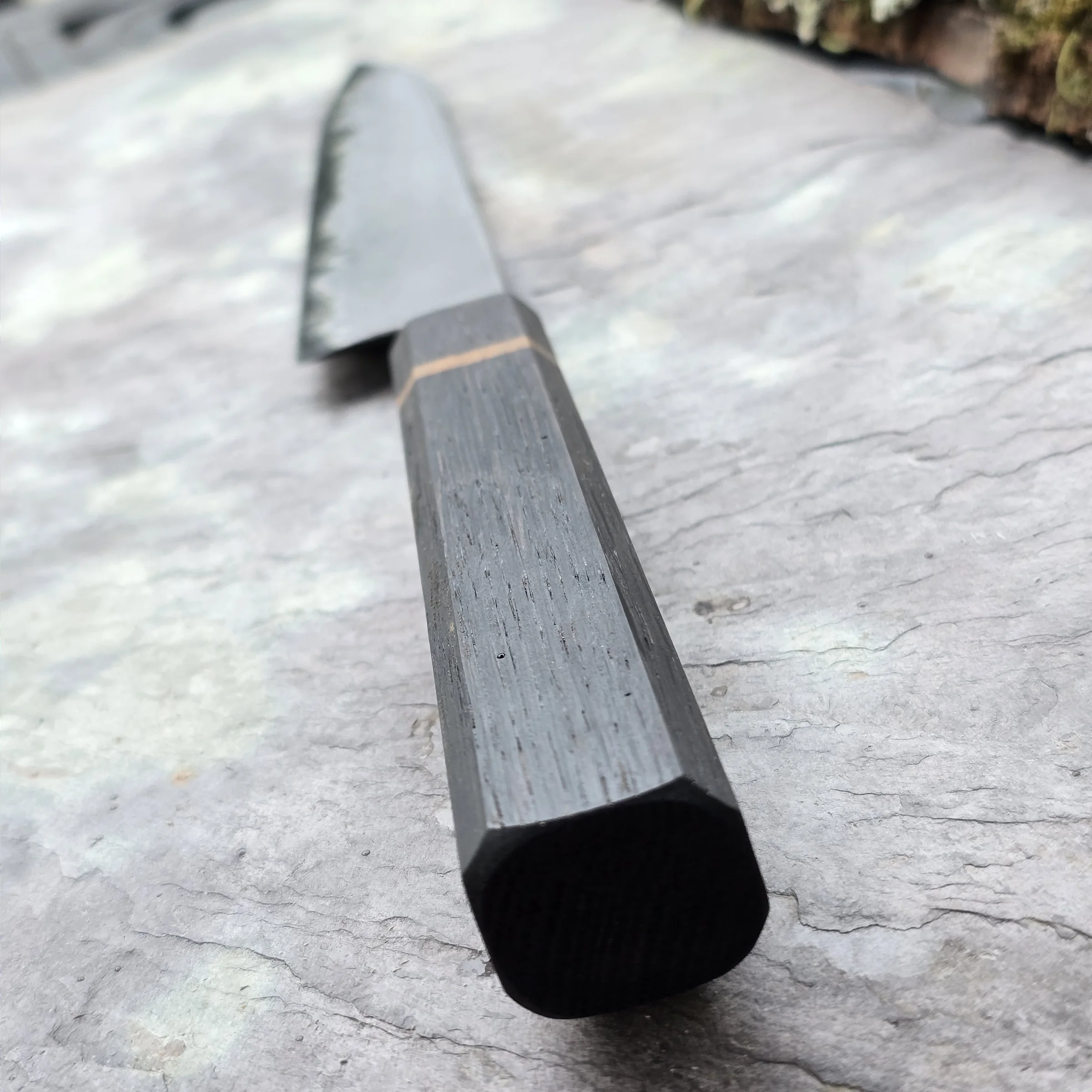
Each handle is shaped specifically for its blade. Length, mass, taper, and density are adjusted until the knife settles naturally in the hand—not as assembled parts, but as one continuous object.
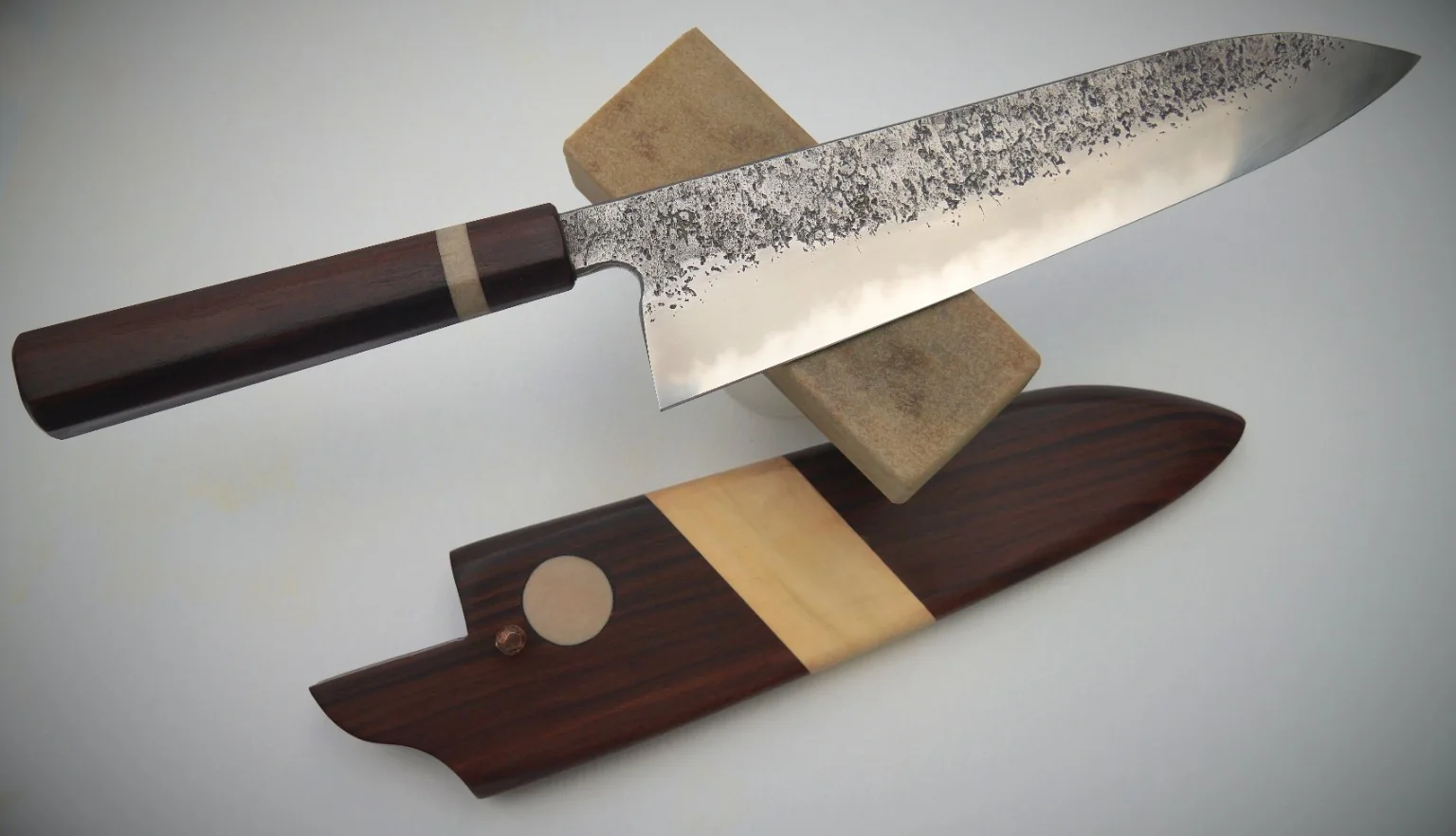
Forged one at a time.
Finished without hiding the evidence.
Made for the work.