
Polton Knives
Hand Forged
Knives
Modern metallurgy meets natural and historic materials.
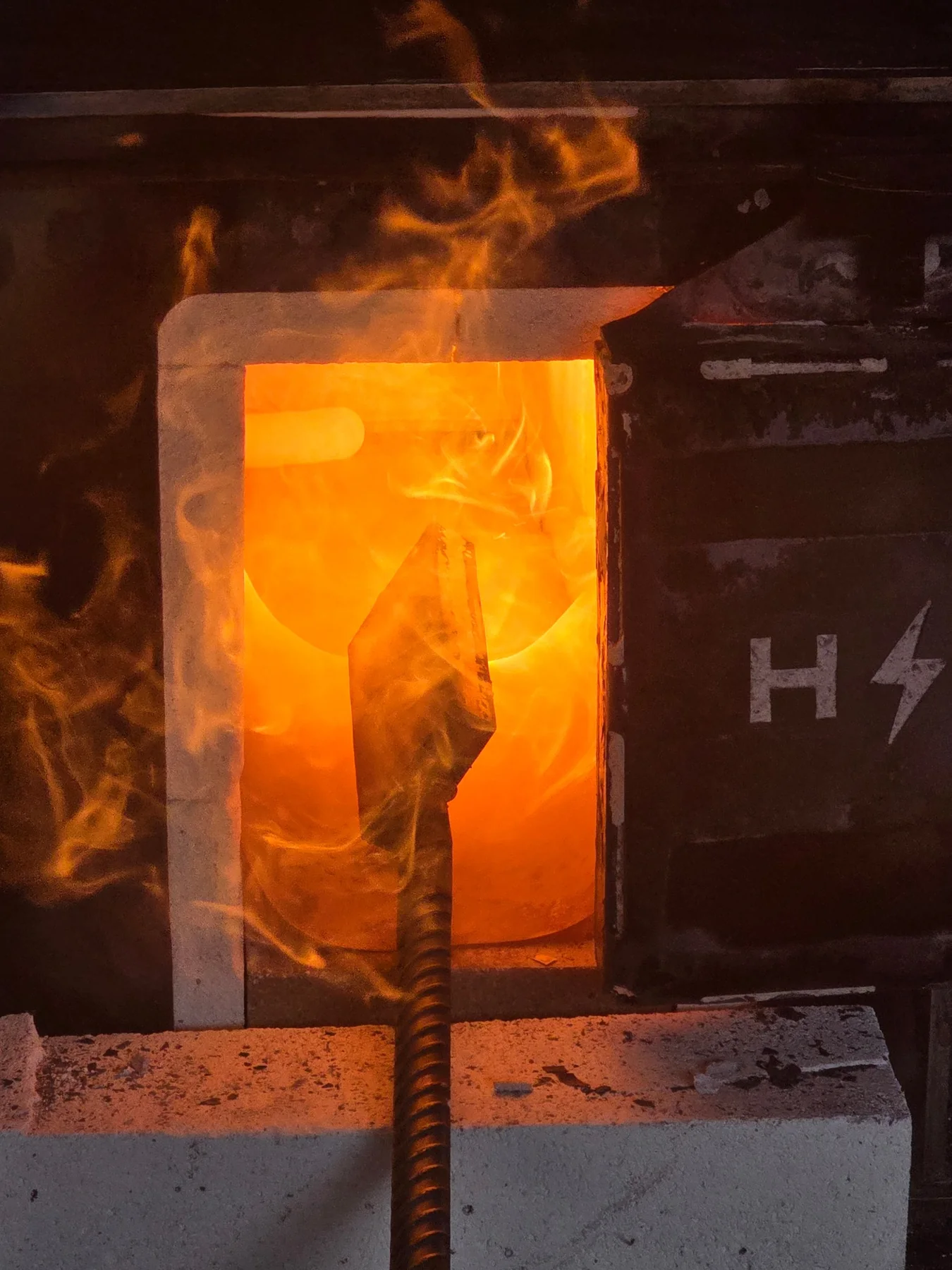
Each knife begins as a small-batch forging—differentially hardened or hand-laminated in-house—with steels selected to balance sharpness, edge retention, toughness, and longevity. The blade is forged and ground with close attention to cutting geometry, taper, and food release.
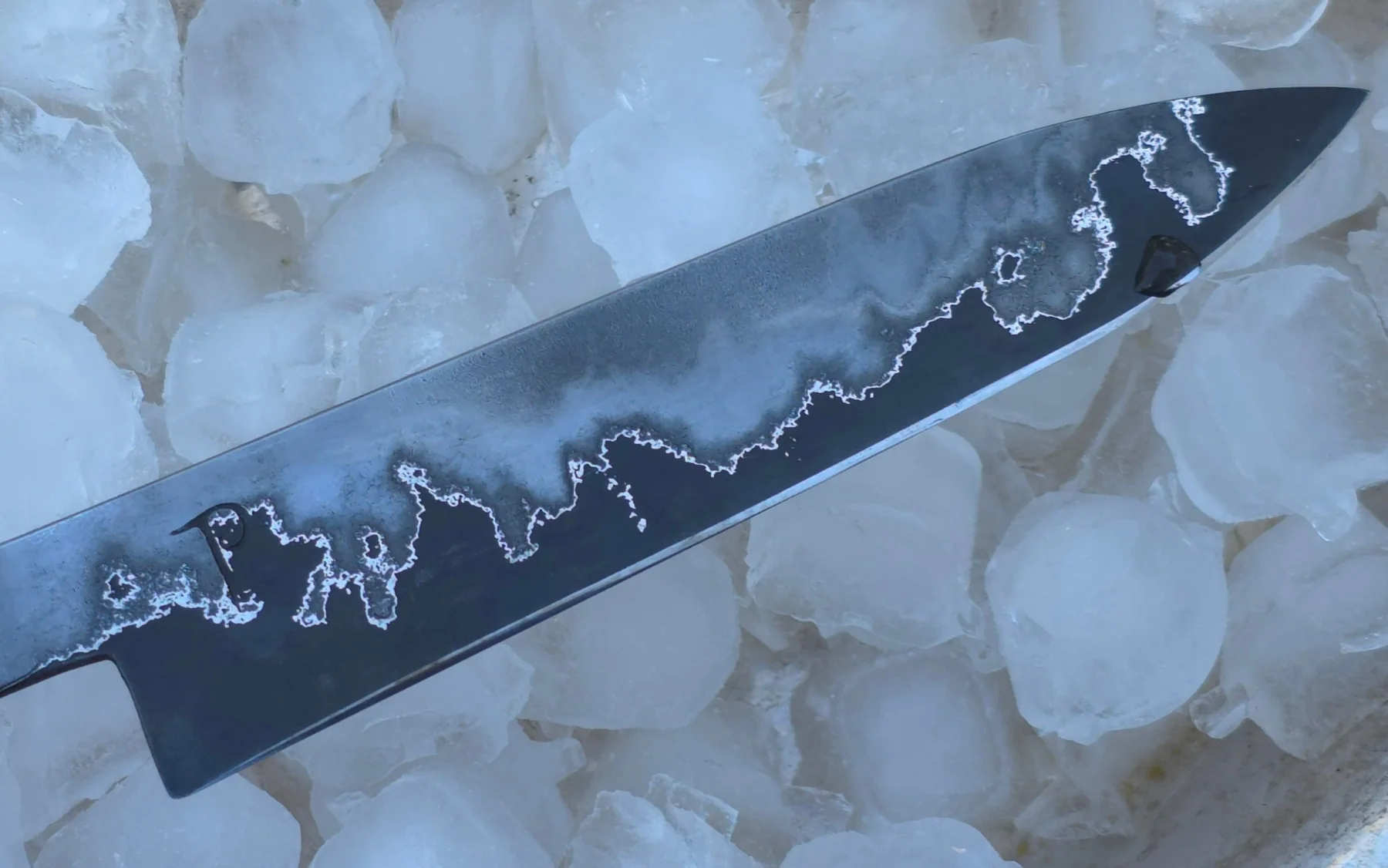
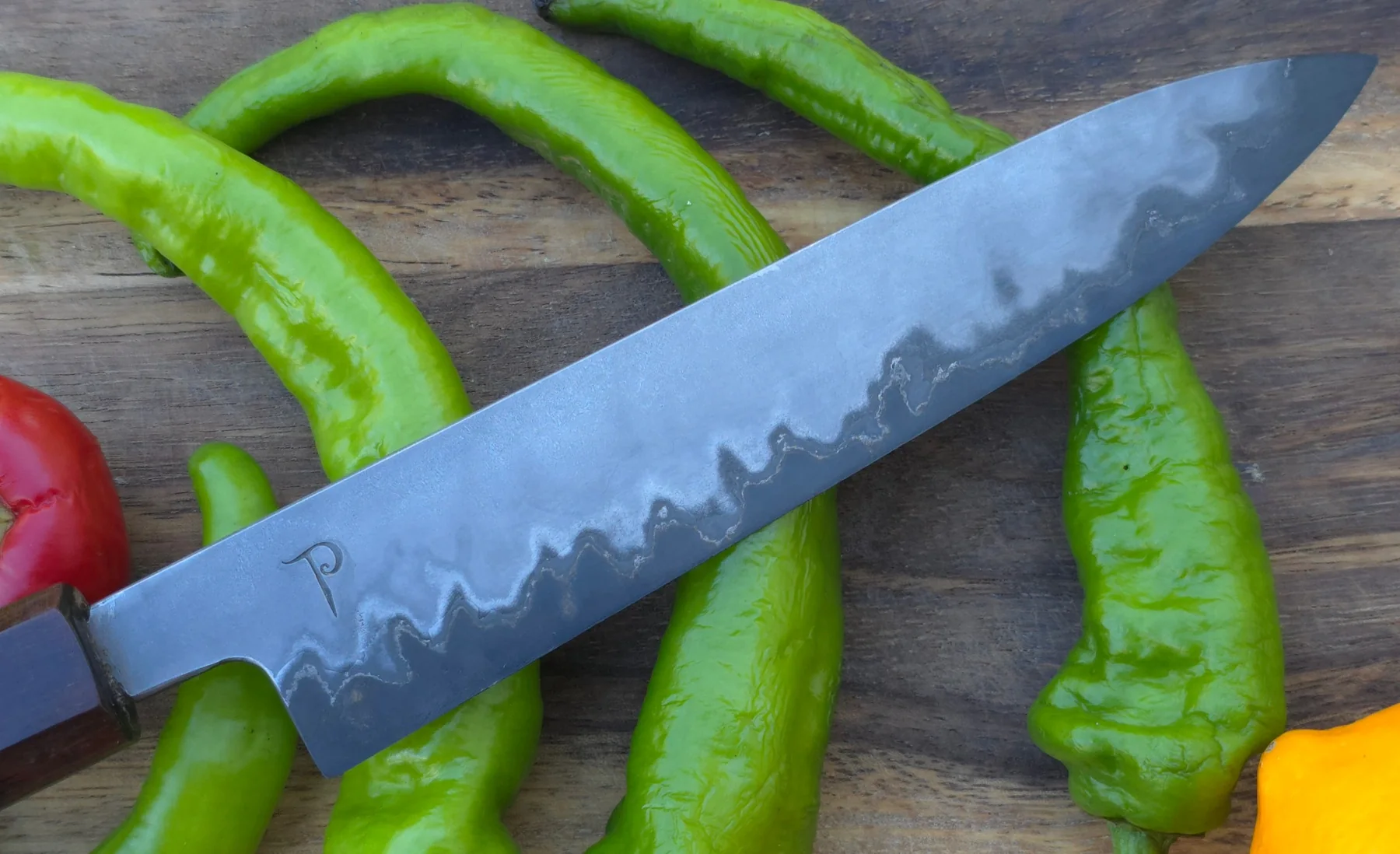
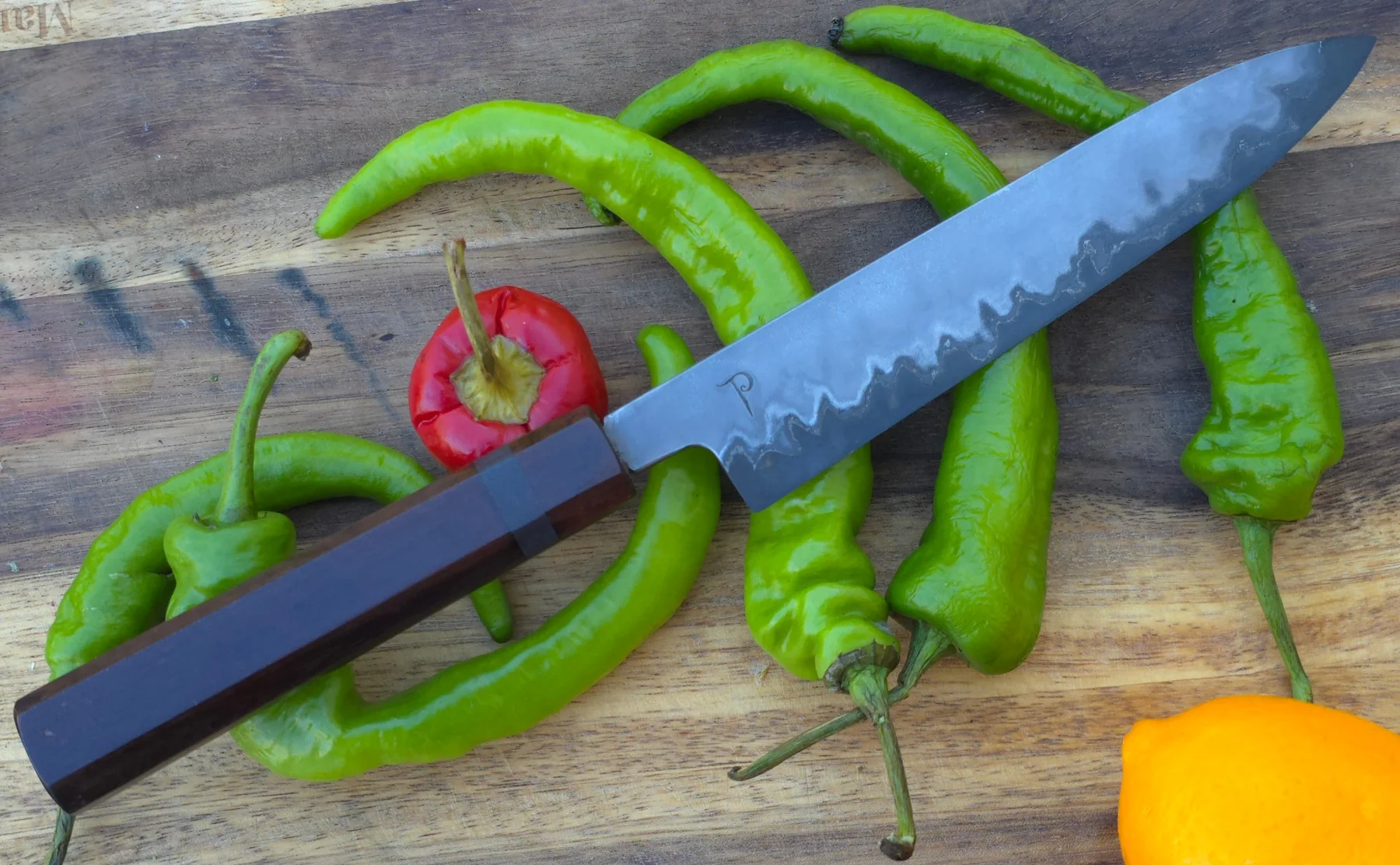
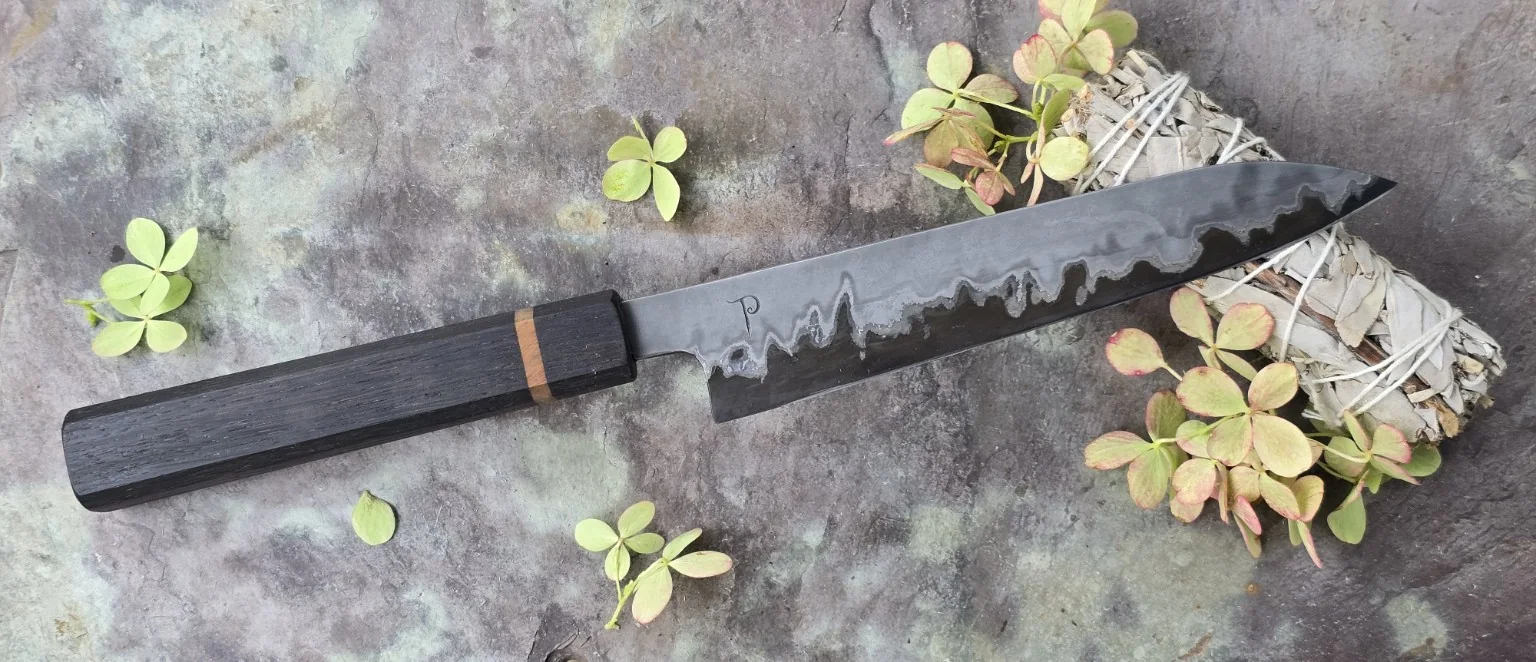
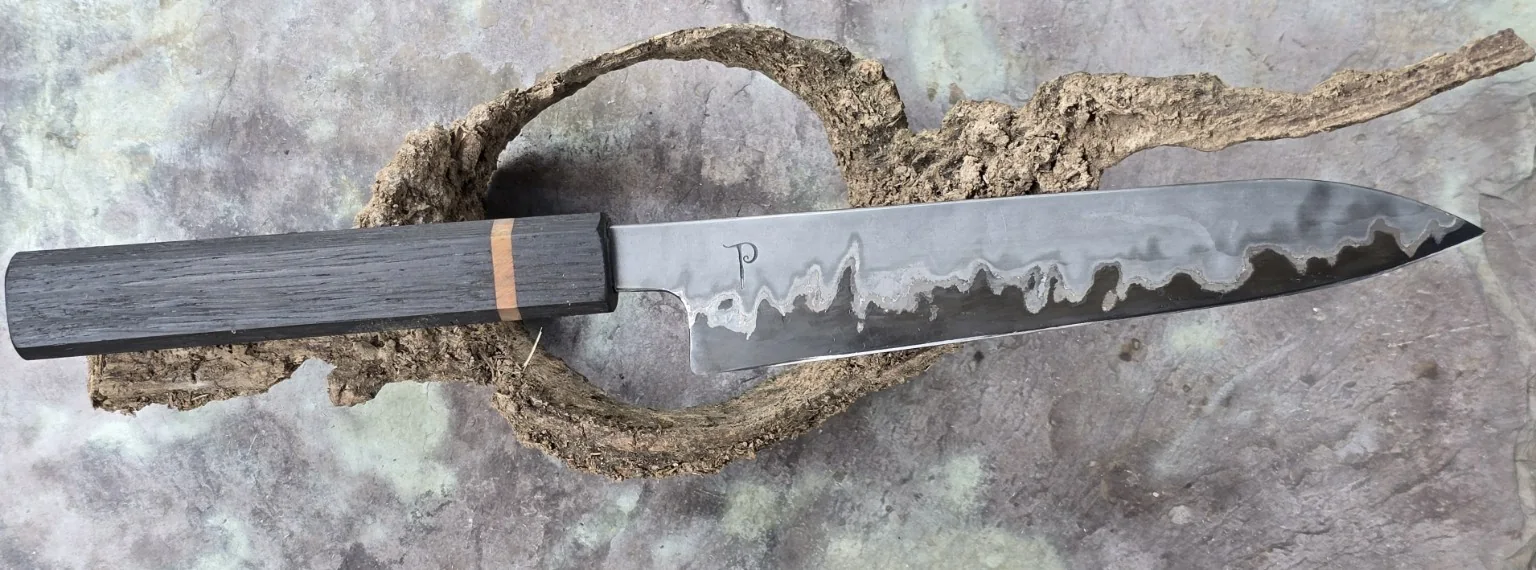
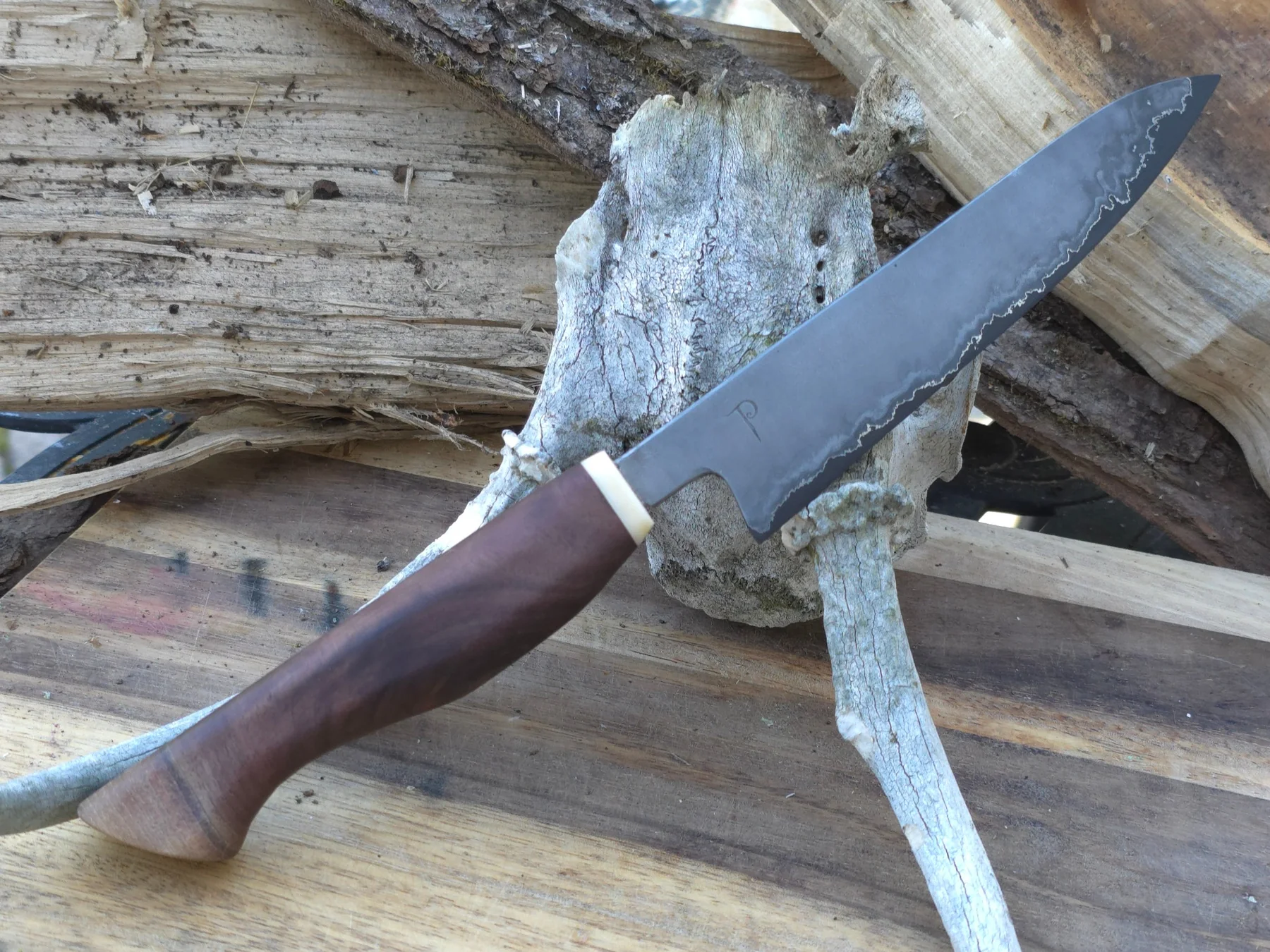
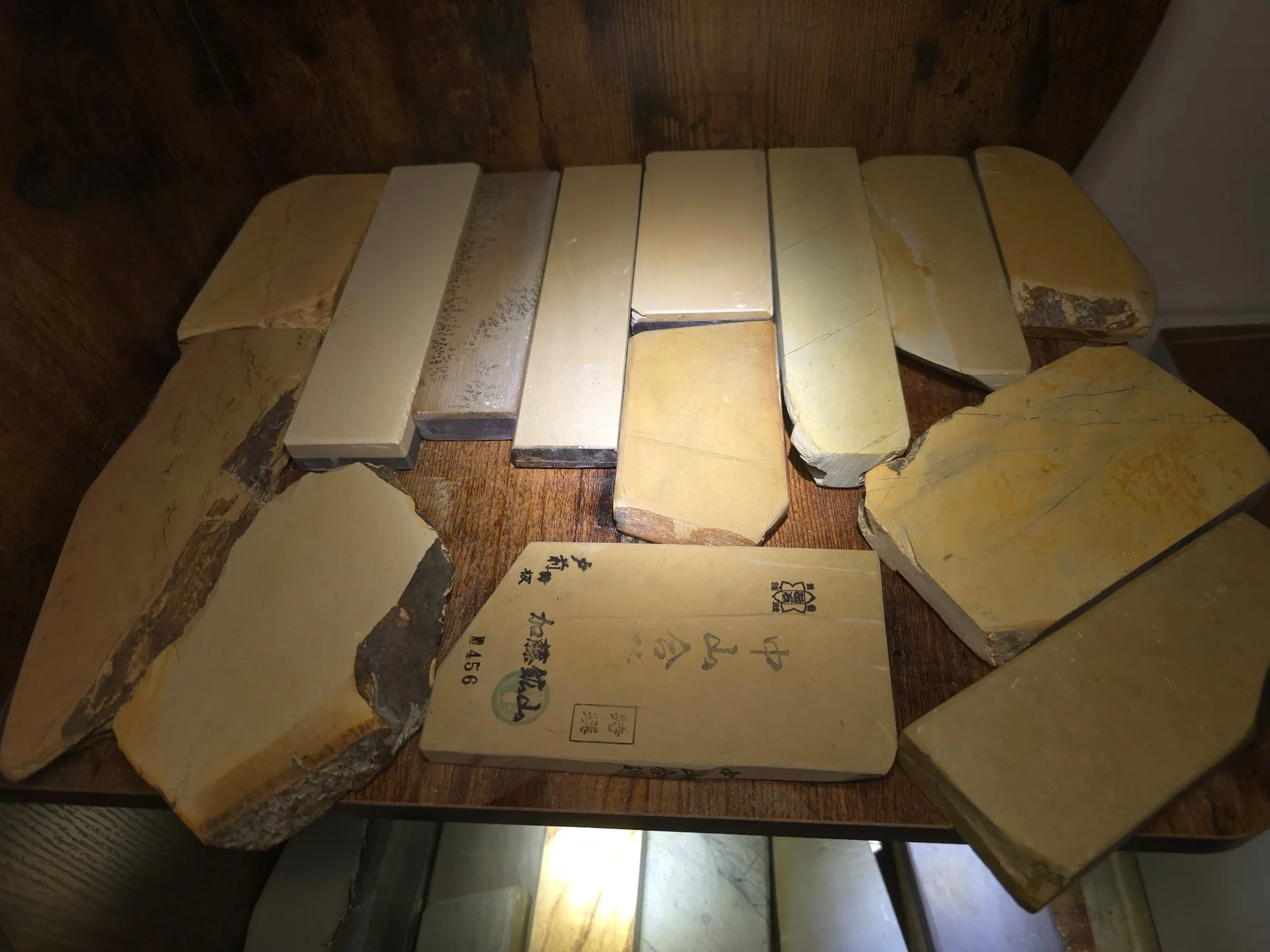
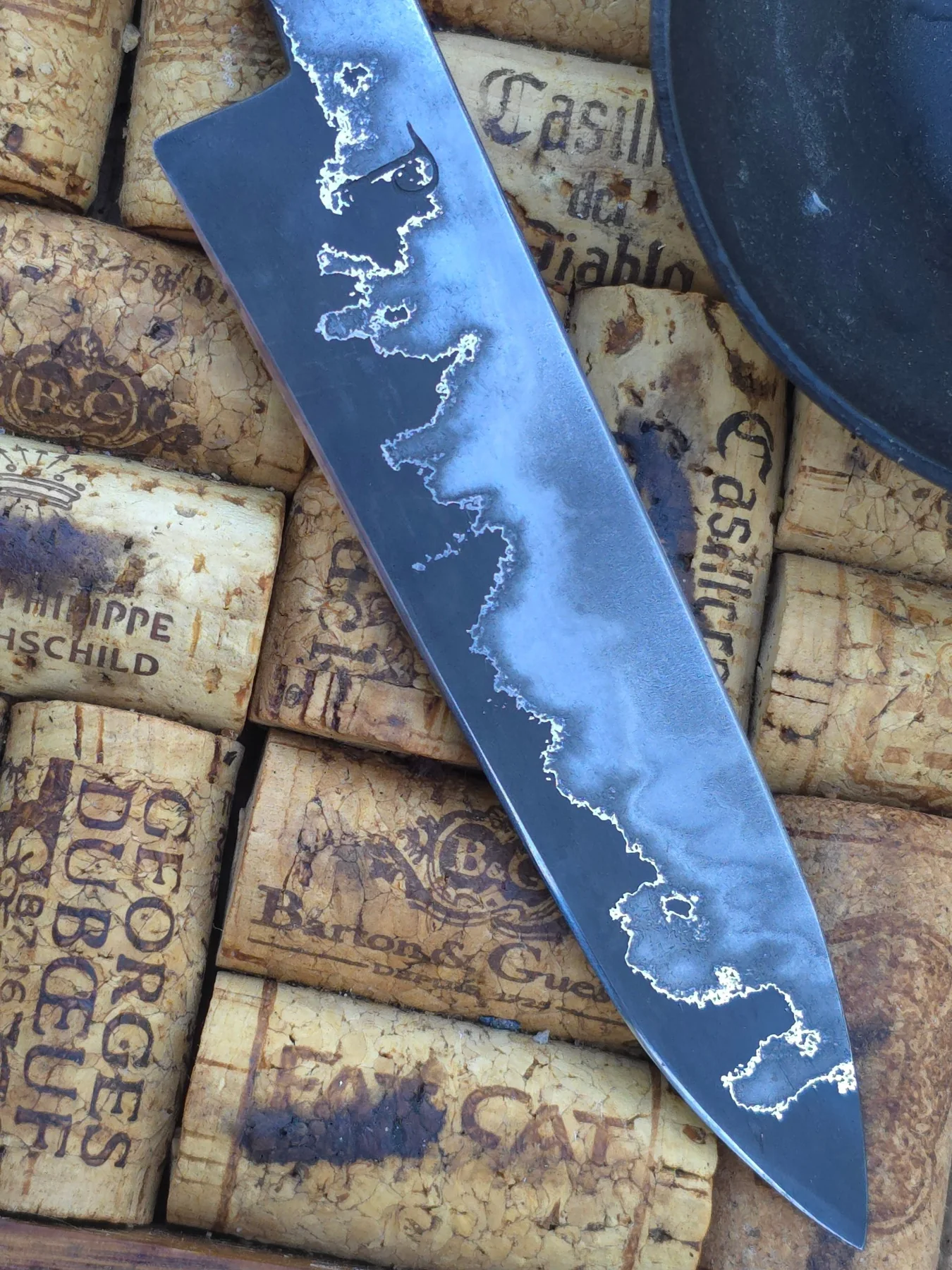
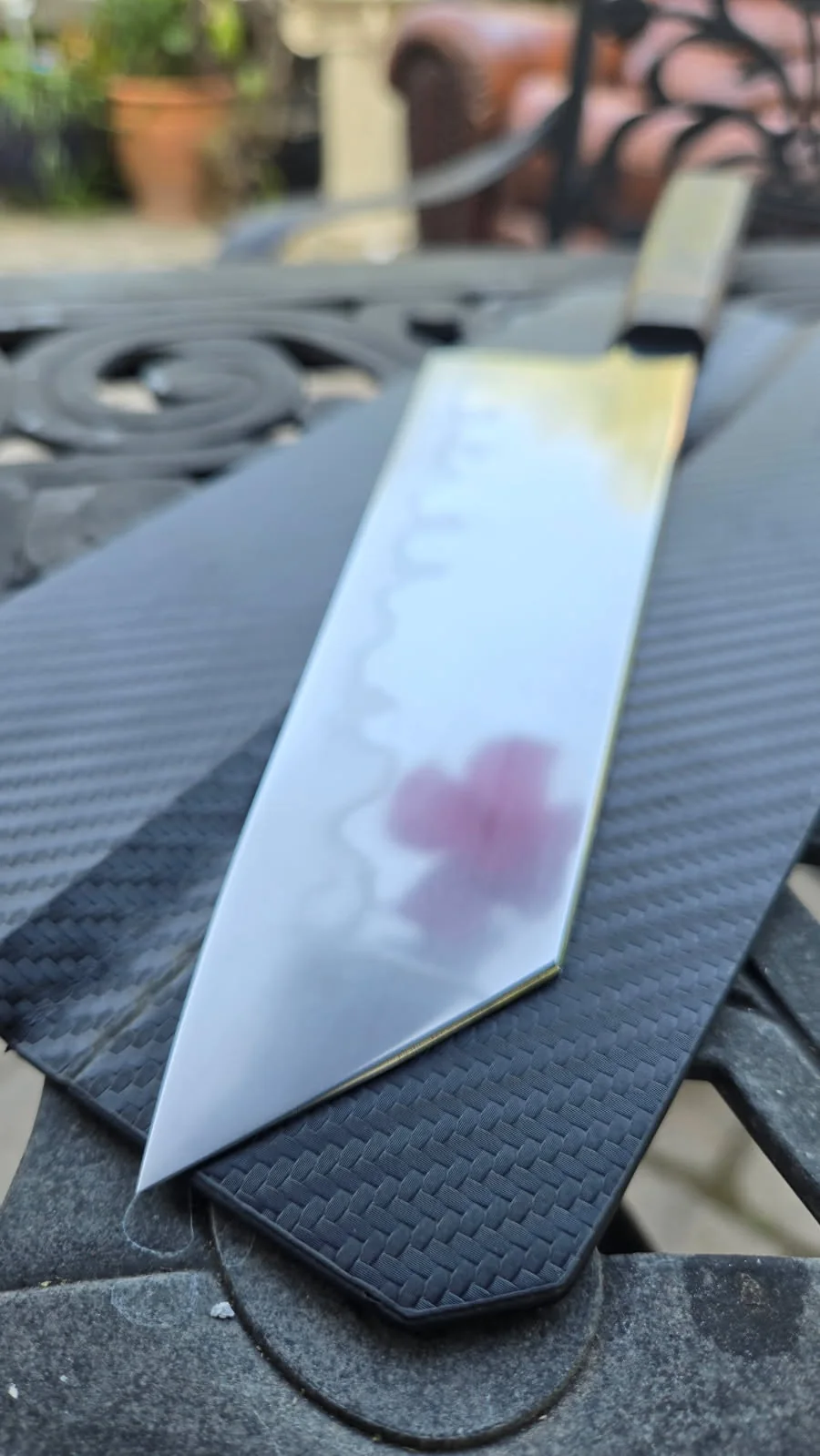
From there, every surface is finished by hand through a progression of natural whetstones. Experimental etching and polishing techniques are often used to reveal what already exists within the steel: carbon banding, grain structure, subtle transitions between alloys, and traces of the forging process itself.
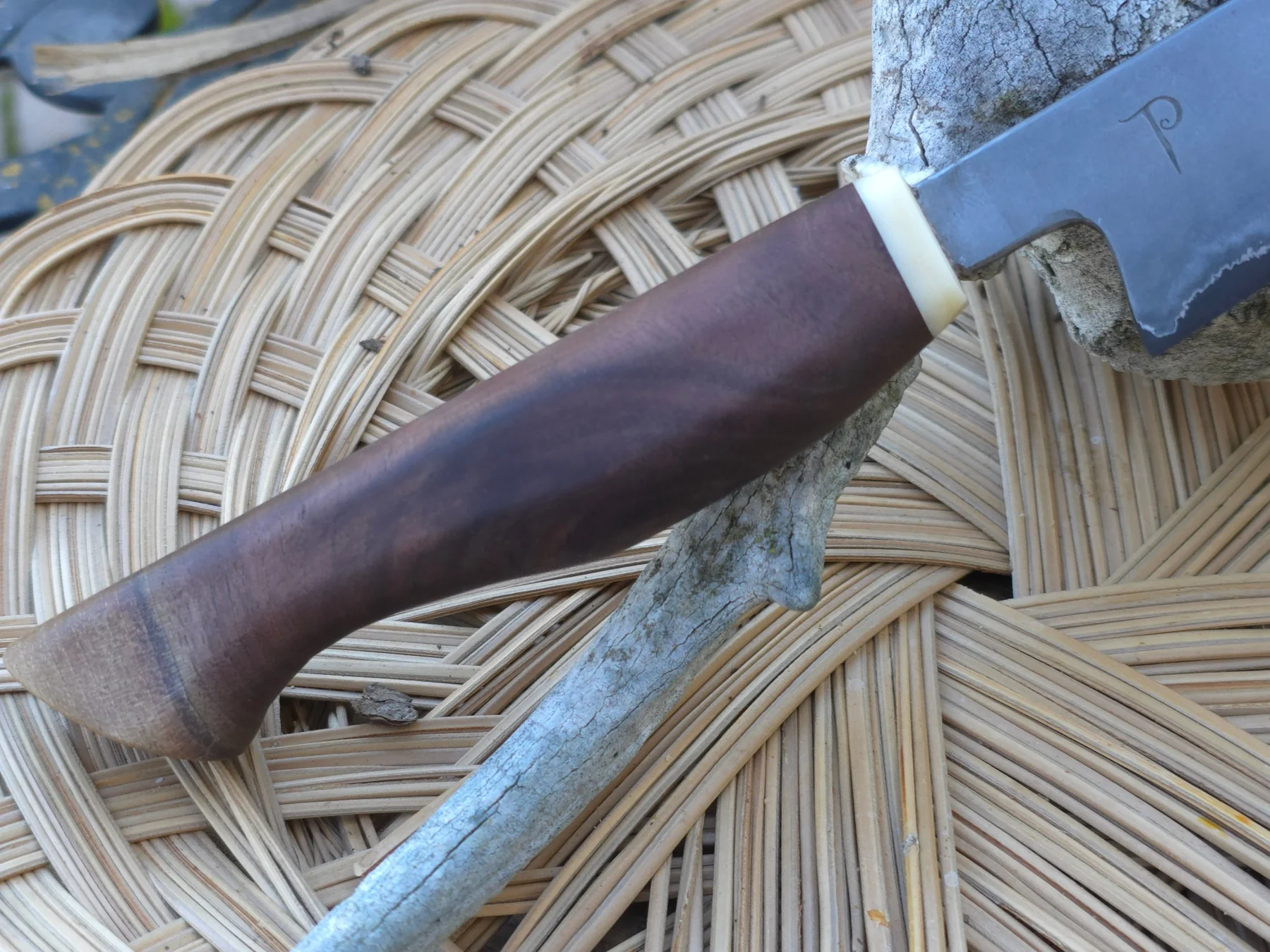
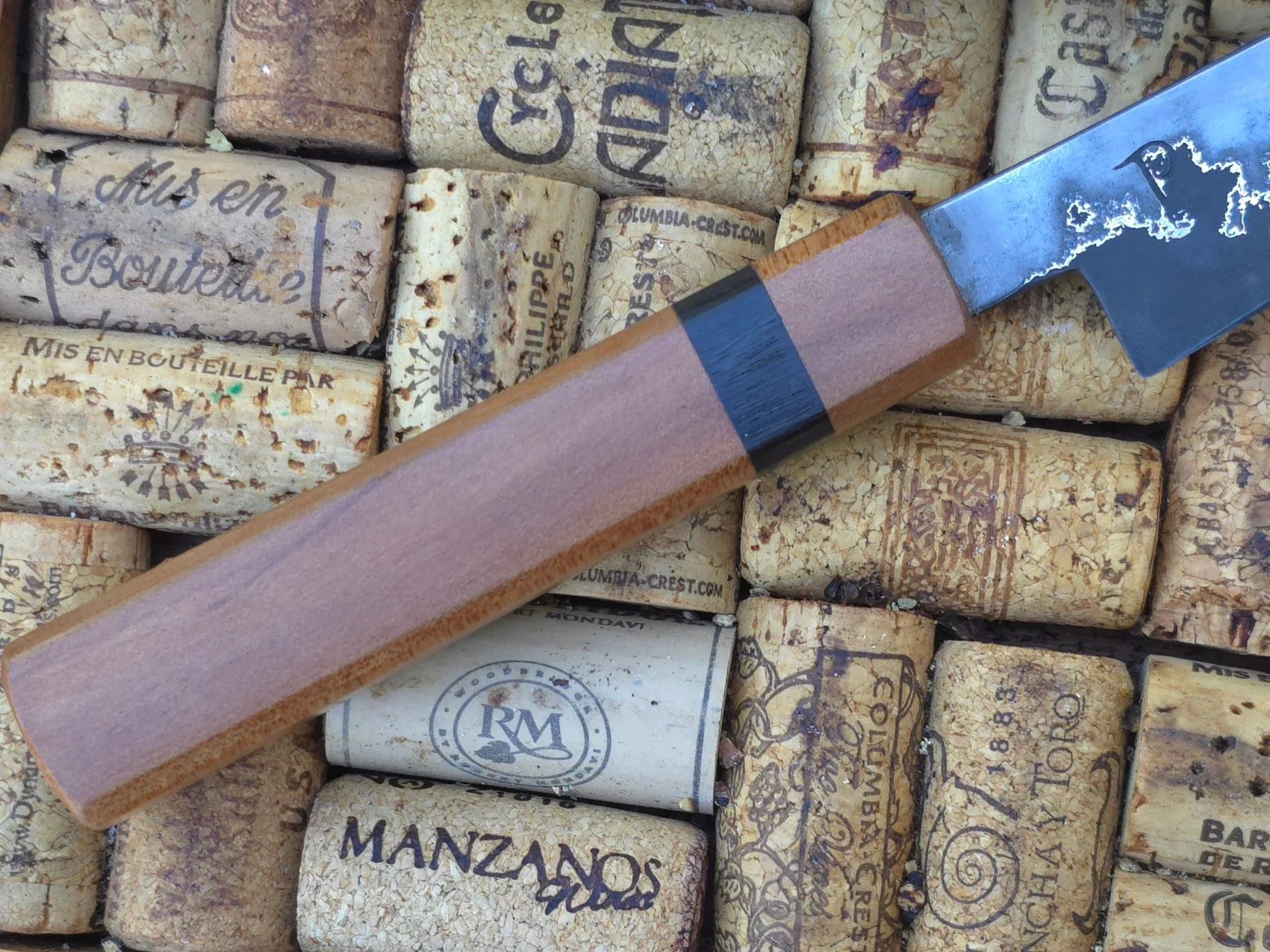
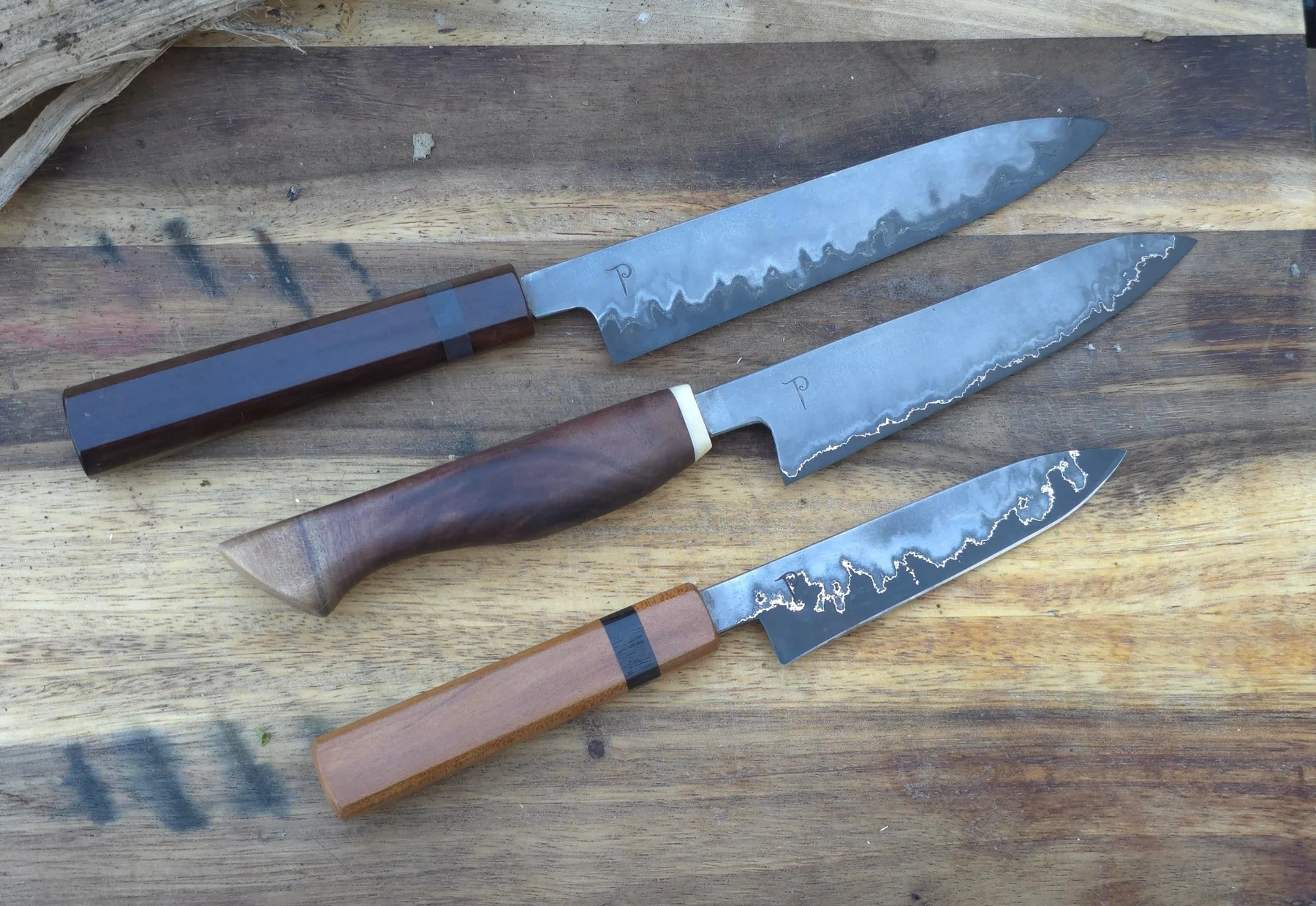
Handles are shaped from carefully selected natural materials and proportioned to complement the weight and character of each blade.
No two knives are intended to be identical. Each is made individually, allowing the steel, stone, wood, and process to leave their own mark on the finished piece.
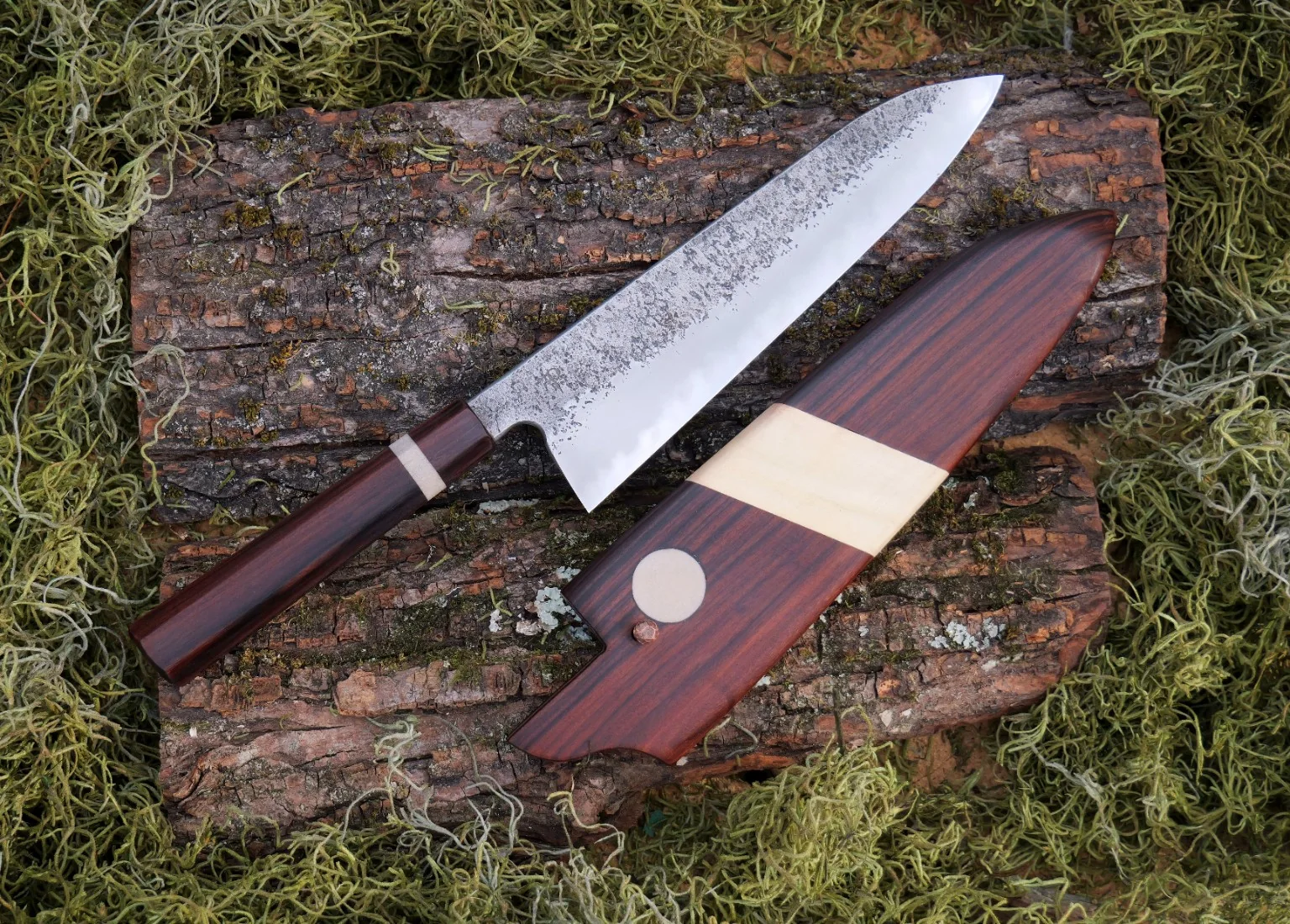
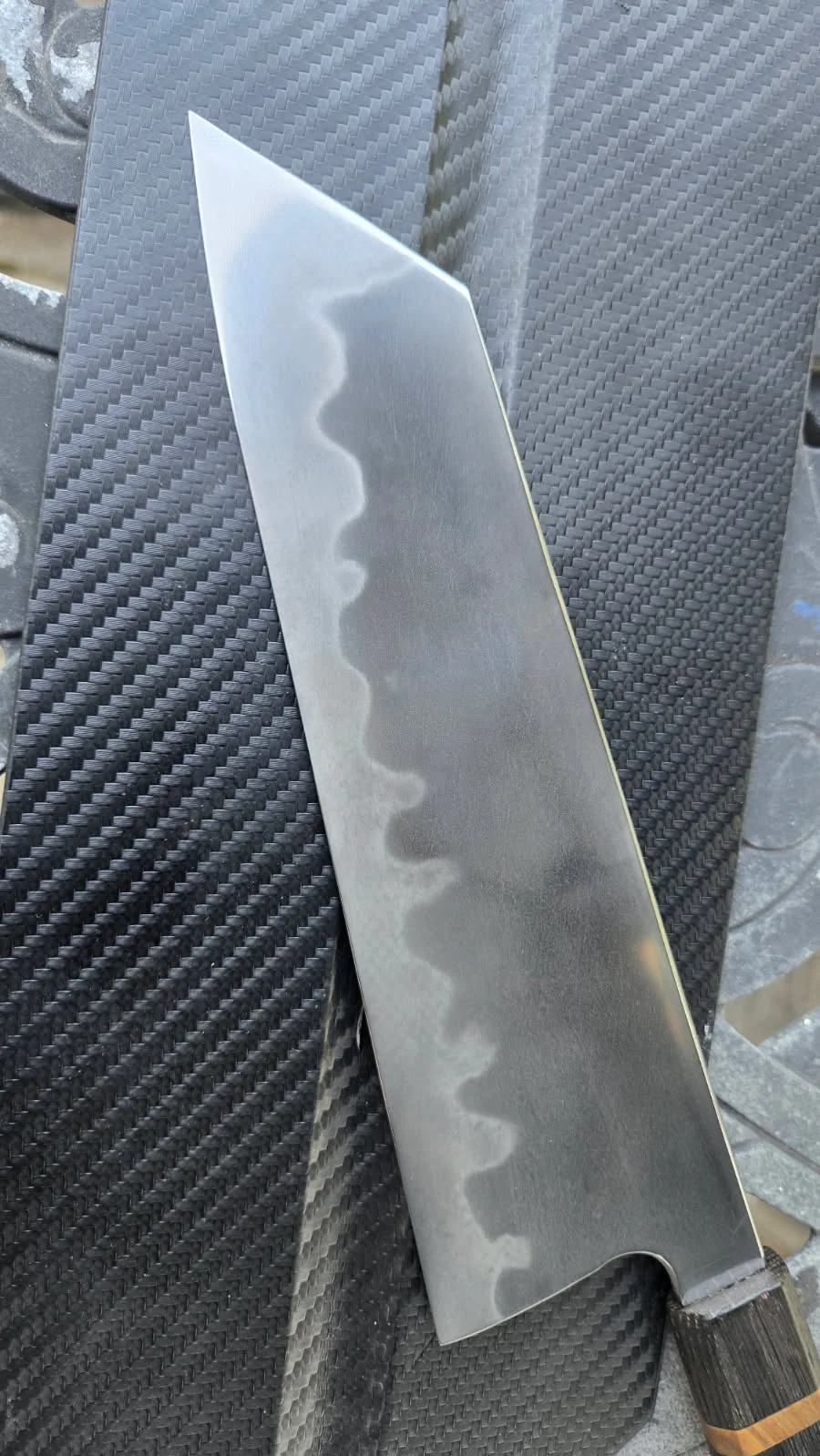
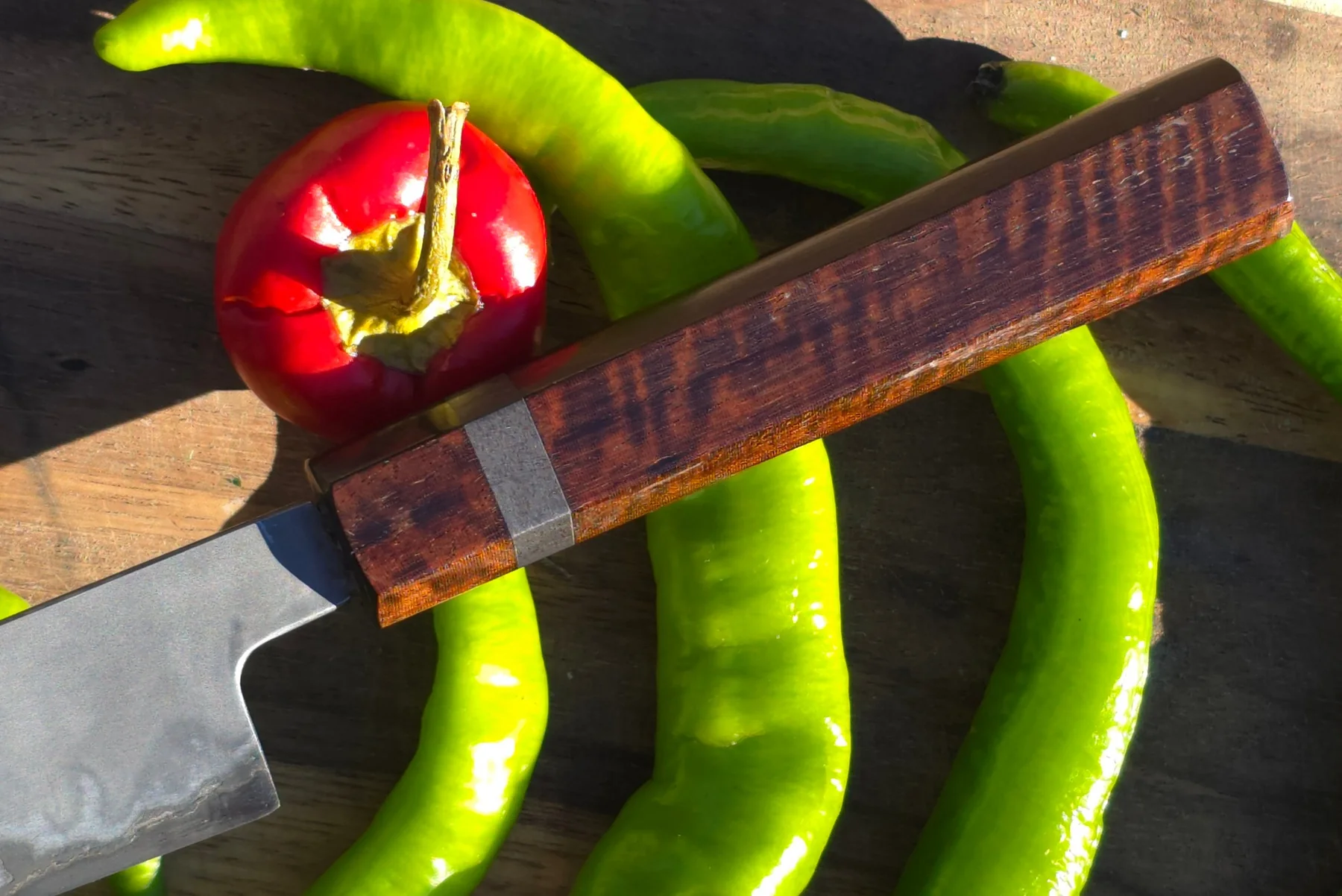
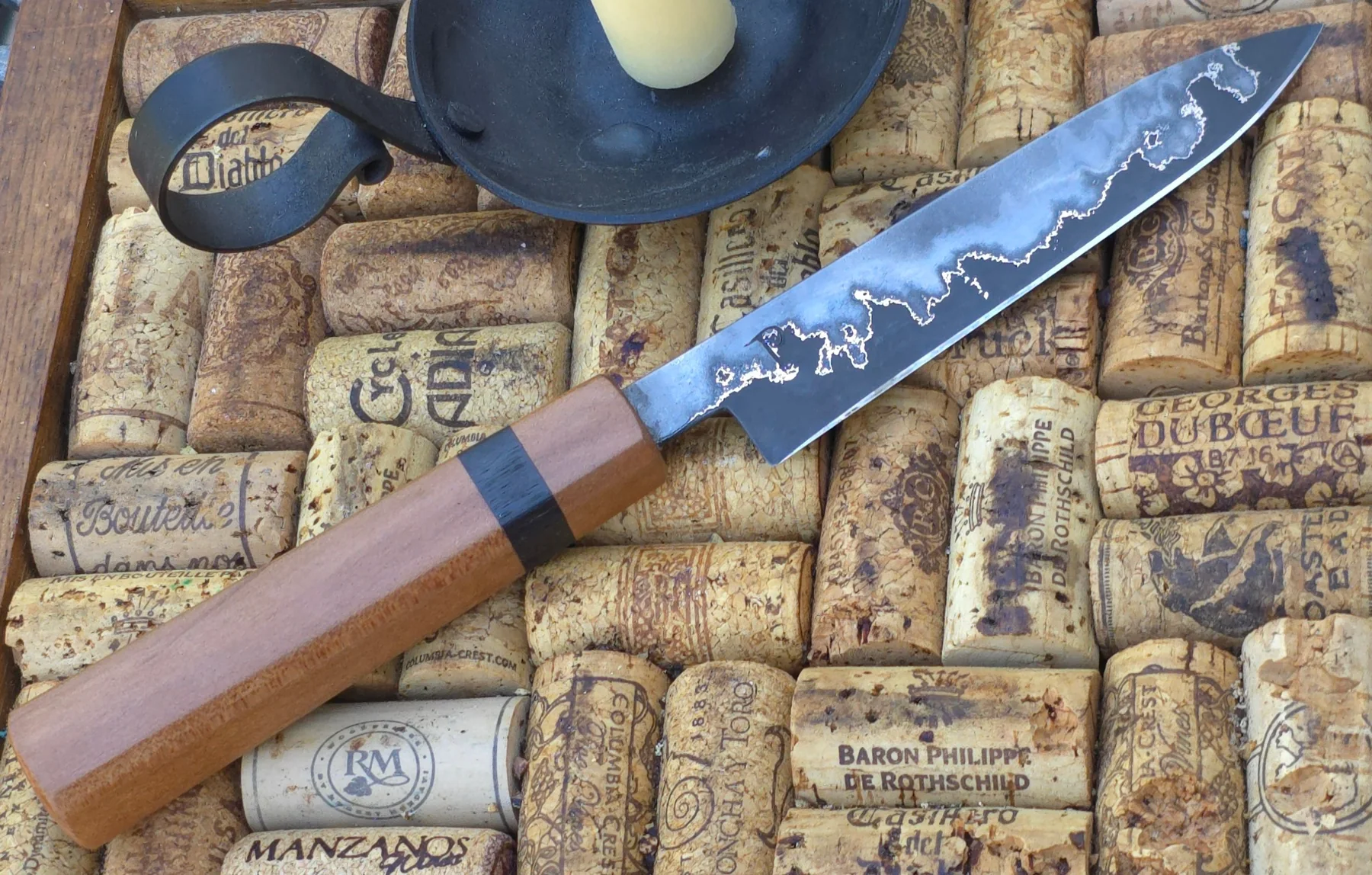
Selected work
View all work ↗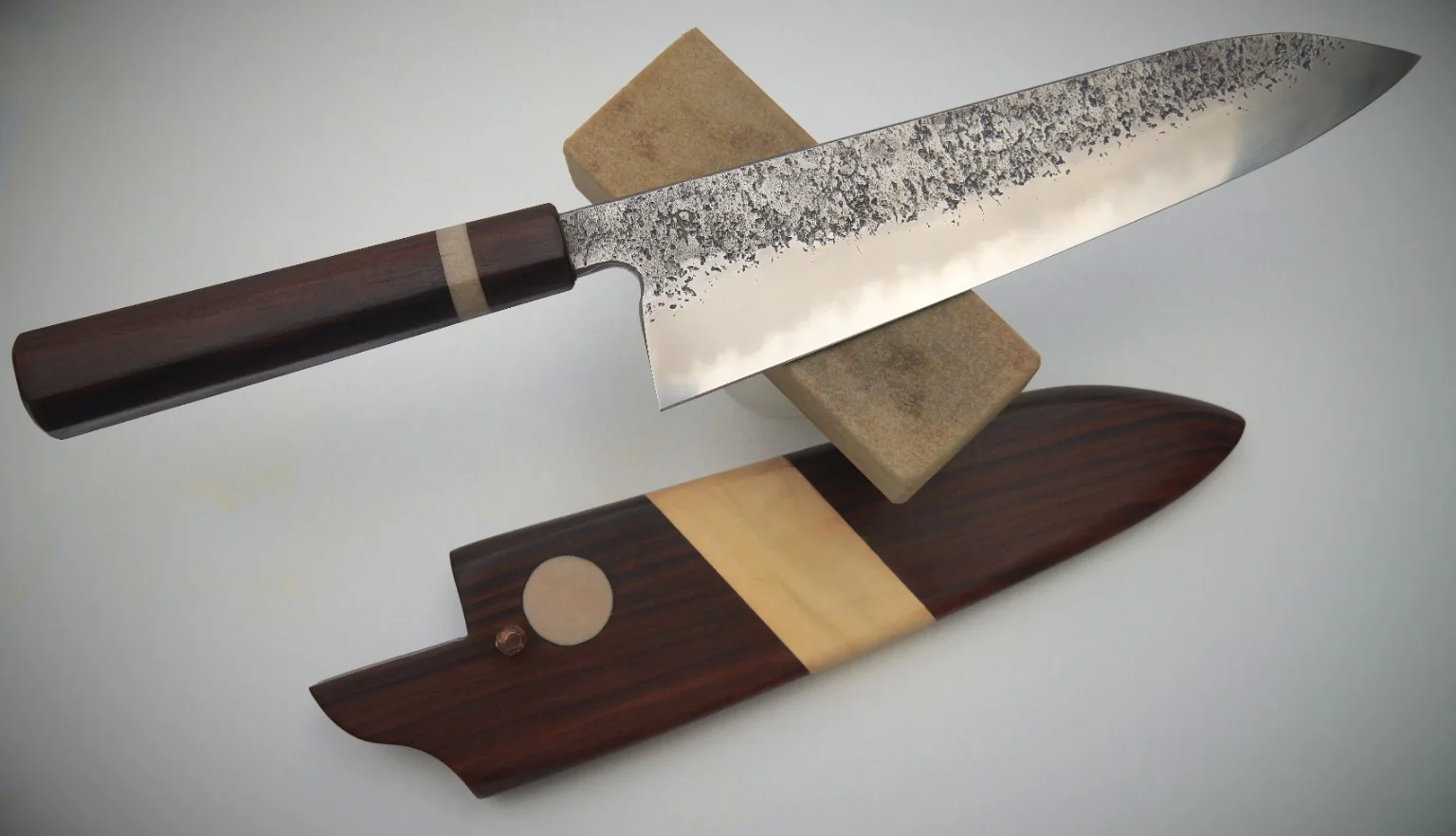
The Maker
Chase Polton
I’m a former restaurateur, lifelong knife enthusiast, and collector of natural whetstones. My approach to knifemaking is driven by a fascination with chemistry, metallurgy, and the way materials reveal themselves through forging, heat treatment, polishing, and etching.
Much of what interests me is experimentation—seeking out unusual materials, refining techniques, and exploring new ways to create distinctive geometry, texture, and finish. Rather than forcing every knife toward the same aesthetic, I prefer to let the character of the steel and the process influence the finished piece.
My work draws heavily from the knives and forging traditions of Sanjo, Japan. I tend toward medium-weight and workhorse geometries, pronounced distal taper, and hidden-tang handles, with an emphasis on knives that feel substantial in hand while remaining precise and highly functional.
For me, knifemaking is as much an exploration of material as it is the pursuit of a finished object.
Materials
Steel, stone, wood, and metal.
My preferred steel is 26C3, often called “Spicy White.” It is an exceptionally clean, low-alloy carbon steel with characteristics reminiscent of Japanese Shirogami #1: fine carbide structure, excellent edge stability, and the ability to take an extremely keen edge. Its slightly higher carbon content and carefully balanced alloying also allow it to reach high hardness while maintaining the qualities I value in simple carbon steels.
It is particularly well suited to thin, low-angle edges and responds beautifully to differential hardening, where it can produce vivid and complex hamon.
I also work with 52100, 80CrV2, Apex Ultra, AEB-L, and Aogami Super, among others. Part of the appeal of knifemaking for me is learning the personality of a new steel—how it moves under the hammer, responds to heat treatment, sharpens, polishes, and ultimately performs.
For san-mai and go-mai construction, I use mild steel, reclaimed wrought iron, stainless steel, and other contrasting materials depending on the character I want from the finished blade.
Mild steel
Produces a restrained, ethereal kasumi. It can be temperamental to polish, but when the finish comes together, the cladding develops a soft haze that seems to drift and blend into the exposed core.
Wrought iron
Offers dramatically more character. Silica banding, grain, inclusions, and the irregularities left by its original manufacture create patterns that become increasingly visible through polishing and etching. No two pieces behave quite the same way.
Stainless cladding
Approaches the blade differently. It is less suited to traditional stone-polished kasumi, but responds beautifully to controlled etching and finishing techniques. It also offers a practical advantage: the cutting edge can retain the sharpness and feel of carbon steel while the stainless exterior reduces the amount of exposed reactive steel. For a professional cook working through a busy service, that can make a meaningful difference in day-to-day maintenance.
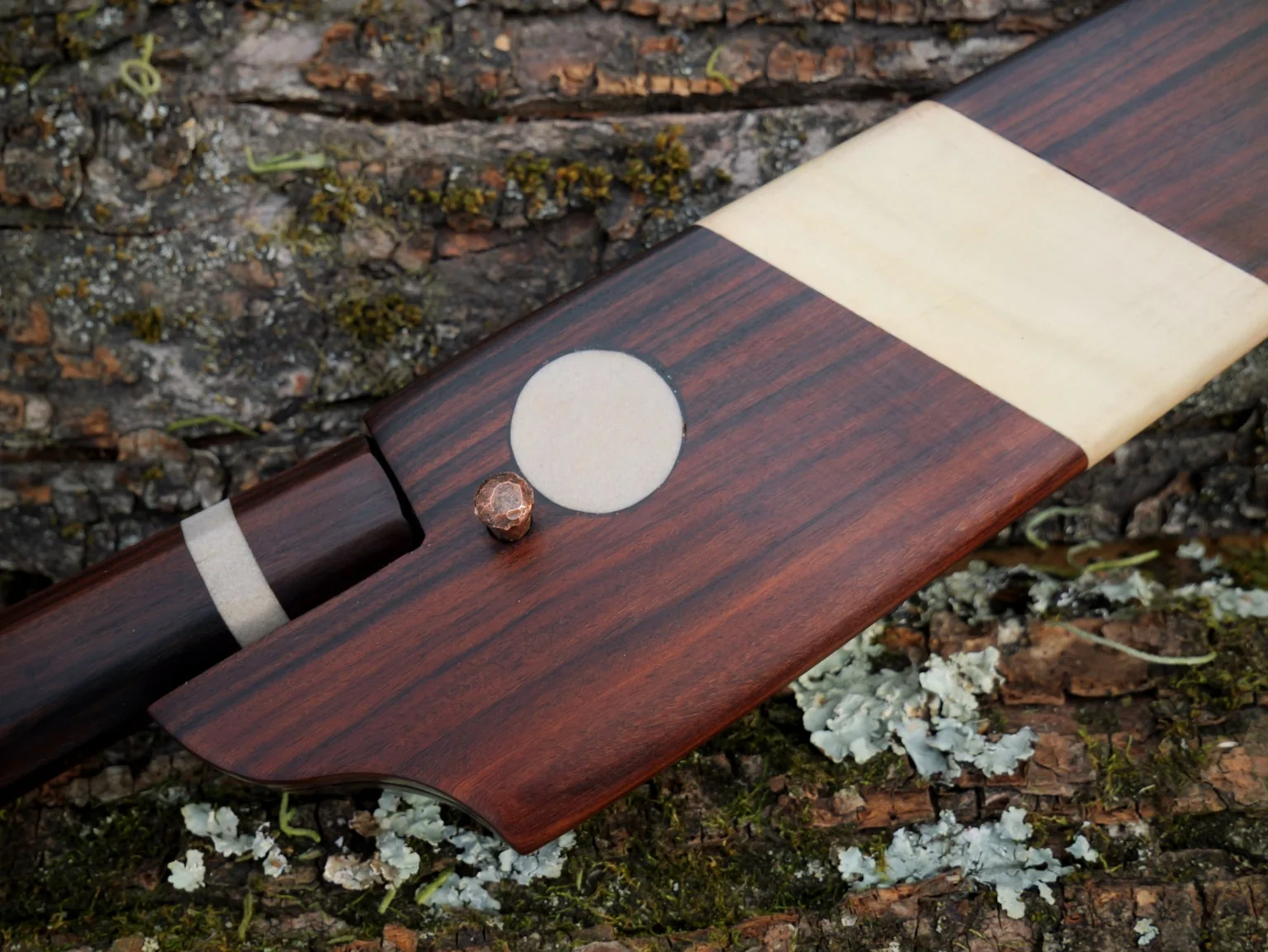
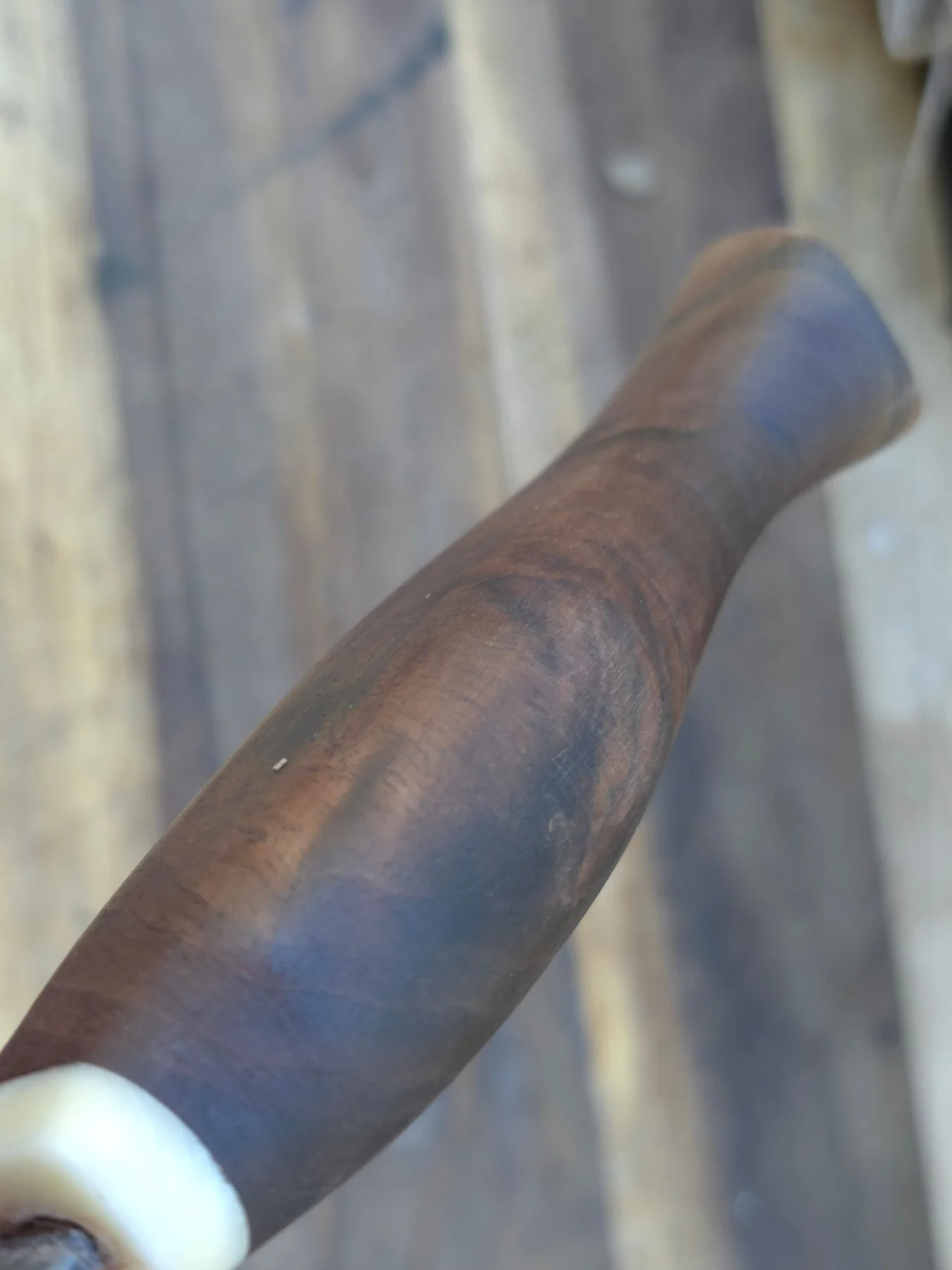
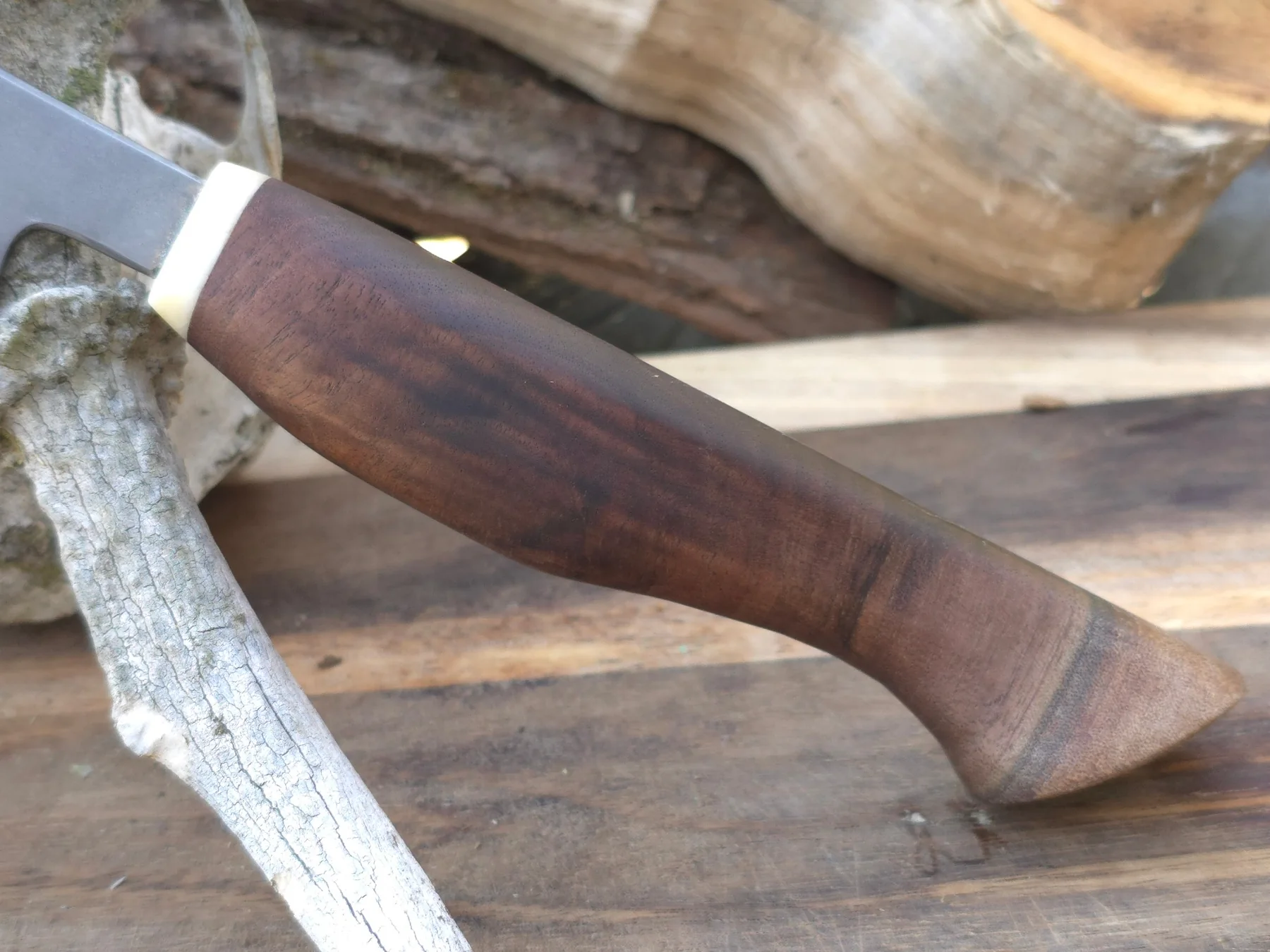
For handles and sayas, I gravitate toward exotic and locally sourced woods chosen for natural color, figure, texture, and character rather than uniformity.
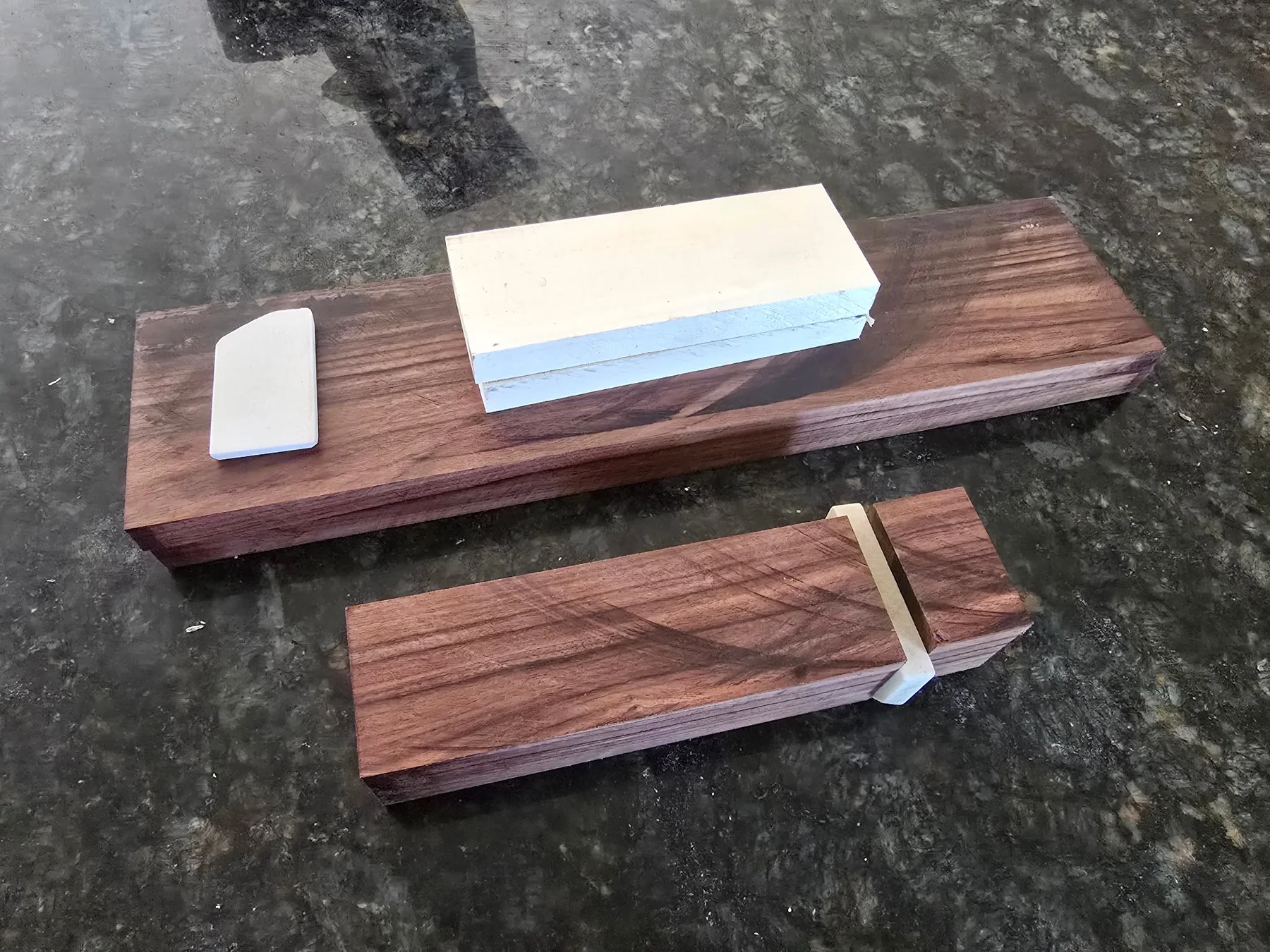
I have also begun incorporating historic natural whetstones and other stone materials into handles, spacers, and details—giving materials once used to shape and polish blades a second life as part of the finished knife.
Depending on the piece, I may also work with bone, horn, copper, bronze, brass, shakudo, and shibuichi. These materials are selected to complement the blade rather than decorate it for decoration’s sake, allowing differences in color, texture, oxidation, and age to become part of the knife over time.
Contact
Start a conversation.
I take on a limited number of commissions each year.
For custom work, available pieces, collaborations, or simply to start a conversation about an idea worth pursuing, reach out directly through Instagram or email.